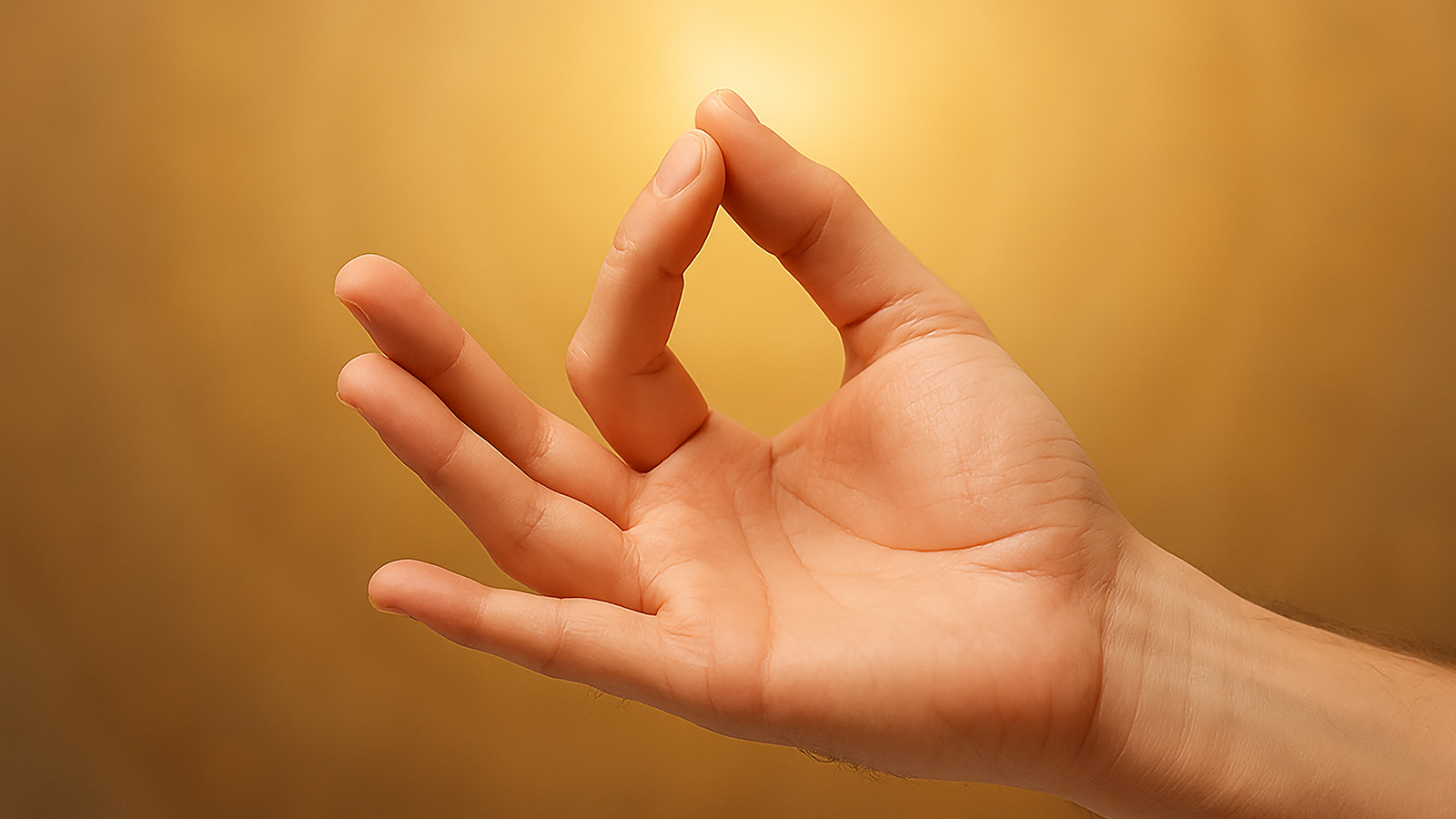
Blog

  • Hasta Mudra: हस्त मुद्रा (Hand Gestures)

    Hasta Mudra: हस्त मुद्रा (Hand Gestures)

    The word Asan (आसन) originates from the Sanskrit root “ās” which means “to sit” or “to be established in a particular posture.” In the context of Yogic practice, Asan refers to a steady, comfortable, and meditative posture. It is the third limb of Patanjali’s Ashtang Yog and plays a foundational role in preparing the body and mind for higher practices like Pranayam and Dhyan (meditation).

    According to the Yogic scriptures, an Asan is not merely physical exercise, but a harmonious integration of body, breath, and awareness. The primary goal of performing Asans is to build physical stability, calm the nervous system, and create a conducive environment for inward focus.

    — Types of Asans: Meditative and Cultural —

    Yogic postures, known as Asans, are broadly classified into two primary categories — Meditative Asans and Cultural Asans — each serving distinct yet complementary purposes in the holistic development of an individual.

    Meditative Asans are postures designed for prolonged, stable sitting. These include classical poses like Padmasan (Lotus Pose), Siddhasan, and Sukhasan, which enable the practitioner to remain still and comfortable for extended durations without fatigue. The primary goal of these postures is not physical exercise but the stabilization of the body to support deeper mental and spiritual practices such as Pranayam, Dharana, and Dhyan. These postures cultivate mental clarity, focus, calmness, and inner peace, creating the ideal environment for the mind to detach from external distractions and turn inward. By bringing steadiness to the body, meditative Asans help pacify the restlessness of the mind and uplift the spirit.

    On the other hand, Cultural Asans are dynamic in nature and focus primarily on strengthening and revitalizing the physical body. These postures act as a bridge between physical wellness and spiritual progress. Cultural Asans work by regulating the flow of Prana (vital life force) through the body’s channels, thereby maintaining internal balance and harmony. They invigorate the internal systems and play a critical role in preventing and curing illnesses. Regular practice of cultural Asans improves flexibility, stamina, muscle tone, joint mobility, and overall physical vitality. Moreover, they help to release stored tensions, stabilize emotions, and cultivate self-control, thus preparing the practitioner for higher yogic disciplines.

    The specific benefits of practicing cultural Asans include:

    • Enhanced strength, energy, and endurance
    • Increased flexibility and mental alertness, which sharpens memory and builds self-confidence
    • Improved functioning of the respiratory, circulatory, digestive, and endocrine systems
    • Deep stimulation and toning of internal organs, muscles, ligaments, and tendons
    • Relief from physical ailments like aches, stiffness, and chronic conditions

    Together, both categories of Asans form the bedrock of physical and mental discipline in Yoga, leading toward a state of perfect health, balance, and spiritual readiness.

    — The Relevance of Asans in Today’s World —

    The ancient Yogic scriptures suggest that there are an astonishing 8.4 million asans, each symbolizing a form of life. It is believed that only Lord Shiva, regarded as the original founder of Yoga, is aware of all of them. However, traditional texts describe only a limited number—approximately 84 well-documented postures, most of which are meditative in nature. This reflects the ancient sages’ emphasis on inner stillness and spiritual pursuit over physical conditioning.

    In contrast, modern society has seen a shift in how Asans are approached and practiced. Today, there is growing recognition of the physiological and therapeutic benefits of Yogic postures, especially the cultural Asans that target physical health and energy flow. As a result, Yoga has gained worldwide acceptance not just as a spiritual path but also as a holistic health system. Modern teachers and authors have responded to this global interest by introducing hundreds of new cultural postures.

    While gymnastics and fitness regimes aim to enhance physical appearance and muscle strength, they often neglect the vital connection between body, mind, and soul. In contrast, Hathyog Asans foster internal harmony. They not only improve posture, strength, flexibility, and organ health, but also elevate mental clarity and spiritual consciousness.

    Another remarkable feature of Asans is their universal accessibility. Unlike strenuous exercise routines that may be unsuitable for older adults or those with physical limitations, Asans can be practiced by people of all ages and body types. There are no gender barriers in Yogic practice either—women often excel in Asan performance due to their natural flexibility and grace.

    In today’s world, where stress, lifestyle disorders, and disconnection from inner peace are common, the practice of Asans stands as a timeless and inclusive solution—one that integrates physical wellness with emotional stability and spiritual growth.

    Asan, in the Yogic tradition, is not merely a form of physical activity—it is a scientifically designed series of movements meant to harmonize the inner and outer aspects of the human being. These postures work not only on the body’s surface muscles but also on the deep control centers within, promoting balance, energy conservation, and subtle awareness. Asans help generate vitality without exhausting the body. Unlike conventional exercise routines, which often aim for outward muscular strength, Asans encourage stillness, internal awakening, and spiritual evolution. They unify the mind, body, and heart—the sacred triad where the spirit resides.

    Below are some simple comparisons between Asan and physical exercises. These points highlight how Asans affect the body, mind, and energy differently than regular workouts. Each comparison helps to understand their unique impact on overall well-being.

    1. Asan increases longevity, while exercise builds a muscular body.

    2. Asan makes the body light, thin, and energetic, but exercise makes the body heavy, fleshy, and strong.

    3. Asan increases flexibility, whereas exercise often leads to a stiff and rigid body.

    4. Asan improves agility and sharpness, but exercise can cause laziness and dullness over time.

    5. Asan gives a feeling of freshness, while exercise usually causes tiredness and fatigue.

    6. Asan controls breathing and uses oxygen efficiently, but exercise increases breathing rate and wastes energy.

    7. Asan helps maintain smooth and balanced blood circulation, whereas exercise puts more pressure on the heart.

    8. Sweat from Asan is odorless, while sweat from exercise often smells bad.

    9. Asan encourages moderation in diet, but exercise can lead to overeating.

    10. Asan increases purity and calmness (Sattva Guna), while exercise may increase restlessness (Rajo Guna) and dullness (Tamo Guna).

    11. Asan preserves body essence and supports celibacy, whereas exercise may increase sexual desires.

    12. Asan improves brain power and memory, while exercise can dull the brain and reduce memory.

    13. Asan strengthens the nervous system, but exercise may reduce its sensitivity.

    14. Asan energizes internal organs and keeps them active, while exercise has no special effect on internal organs.

    15. Asan strengthens Prana (life force) and supports inner awareness, whereas exercise increases outward focus and has no effect on Prana.

    — Asans and Holistic Well-Being —

    Good health is not merely the absence of disease—it is a natural birthright of every individual. A truly healthy body is the foundation for living a joyful, meaningful, and fulfilling life. It brings enthusiasm, sustained energy, stamina, and emotional balance. At the same time, it allows one to experience true rest and relaxation. Such a body is capable of facing all kinds of physical, emotional, and mental stress without being disturbed. It becomes naturally immune to many illnesses and remains constantly active, responsive, and aware.

    However, physical and mental capabilities grow and evolve only when they are used mindfully and appropriately. If they are overused, misused, or neglected, deterioration sets in. Muscles weaken, nerves lose sensitivity, and the mind becomes dull and restless. Yoga emphasizes that a pure, stable mind can only thrive in a healthy, well-functioning body. Both the body and the mind require the right balance of movement, nourishment, and rest to maintain this harmony.

    Asans, or yogic postures, are one of the most effective means of maintaining and restoring this balance. They offer the necessary physical movement to the body while simultaneously reducing accumulated stress and tension from both body and mind. Unlike rigorous workouts that often exhaust energy, Asans conserve and channel it. Regular practice helps to purify the body, rejuvenate tired systems, and gradually lead it back to its natural state of wellness. As the body becomes lighter and healthier, the mind too begins to calm down—creating the perfect foundation for advanced Yogic practices like pranayam and meditation.

    Yoga Asans are inclusive and adaptable, suitable for people of all ages. When practiced with sincerity and consistency, they promote inner coordination among the body’s muscles, nerves, and organs. This integrated activity leads to the development of ideal body rhythms, internal cleansing, and lasting immunity. Over time, one develops greater endurance, flexibility, and vitality, along with strong internal organs and a balanced mental state.

    In the Yogic path, the body and mind are not separate—they are the instruments for spiritual advancement. The body acts as the vehicle, and the mind as the driving force. For a sincere seeker, maintaining both in excellent condition is essential. True Yoga, therefore, is not only about flexibility or strength—it is about unifying the body, mind, and spirit to live in complete health, clarity, and awareness.

    — Asan’s Impact on Subtle Body —

    The practice of Asans in Yoga goes far beyond simple physical movements. Each posture is carefully crafted and executed through a series of slow, mindful, and controlled actions. These gradual movements are not random—they are systematic patterns that lead the practitioner into a stable and purposeful position. As one flows naturally into these postures, both the body and mind are gently disciplined. With regular and correct practice, the practitioner begins to develop a deeper awareness of subtle inner energies and capacities that often remain hidden in daily life.

    Unlike other forms of physical exercise that focus solely on external muscle development, Asans work from the inside out. They awaken and align the body’s inner systems while also refining the awareness of the mind and spirit. This integrated awareness helps bring together the physical body, the emotional mind, and the spiritual self into a state of unity. Over time, the practitioner becomes more conscious of their own physical structure, mental tendencies, and latent spiritual strength—leading to holistic self-improvement.

    When performed with full attention, Asans begin to produce not only physical but also psychological and spiritual effects. These effects become even more powerful when the Asans are combined with other yogic techniques such as Bandhs (energy locks) and Nauli (abdominal muscle control). These practices stimulate the deeper energy centers of the body, igniting spiritual awareness and psychic development—elements often missing in conventional fitness systems.

    Yogic texts teach that the physical control centers of the gross body are closely connected with the psychic energy centers, or chakras, of the subtle body. As Asans stimulate these chakras, the body’s latent energy, known as Prana, is awakened. This energy begins to flow more freely, and the practitioner may experience the movements becoming spontaneous, effortless, and deeply harmonious. Such effortless flow is a sign that the practice has become meditative in nature.

    These natural and smooth bodily movements, arising without strain or force, are often described as “meditation in motion.” They represent the deeper purpose of Yoga—not just to move the body, but to merge movement with awareness, breath with consciousness, and form with energy. It is in this space that true transformation begins—where the external discipline of Asan turns inward and awakens the highest potential of the human being.

    — Establishing Practice of Asans —

    To gain true and lasting benefits from the practice of Asans, regularity and consistency are essential. Like any meaningful discipline, Asans yield the best results when practiced as a part of one’s daily routine throughout life. The only real requirements are a genuine desire, inner motivation, and a willingness to follow the path with patience and discipline.

    True progress in Asans is not immediate. Mastery cannot be achieved in just a few days or months—it is a gradual process that unfolds over time. In fact, it may take years of steady practice to gain deep proficiency. In rare cases, even after prolonged effort, perfect execution may remain elusive. However, this should never discourage a sincere practitioner. The journey itself is valuable. With persistent and faithful practice, the body and mind will slowly open up, and each session will bring improvement. Over time, this persistence builds not only skill but also deeper patience and enthusiasm.

    While Asans are generally safe and beneficial for most people, certain age and health considerations must be respected. It is not advisable for children under the age of eight to begin practicing Asans. During those early years, outdoor play and natural movement provide sufficient physical activity. From the age of eight onward, children may begin with simple postures. Gradually, as they develop strength and awareness, they can move on to more advanced ones. Anyone over the age of fifteen and in reasonably good health can begin Asan practice confidently. However, individuals with known or suspected health conditions should first consult a physician before starting.

    A positive mental attitude and a calm environment are key to beginning your practice. It’s recommended to start with simple postures, ideally choosing around twenty basic Asans from various categories to ensure that all parts of the body are exercised. As the body becomes familiar with these, one can slowly transition to more challenging postures meant for intermediate levels.

    It is important to remember that perfection is not required to experience the benefits of an Asan. Even if one cannot fully achieve the ideal posture, sincere effort brings physical and mental gains. A slight sense of effort or mild discomfort is acceptable, but one should always avoid forcing or over-straining the body. Each individual must respect their own limits based on age, health, and physical ability.

    As the body gradually adapts, initial stiffness and soreness will naturally decrease. Muscles become conditioned and more flexible with time, preparing the body for deeper and more refined practices. A few weeks of consistent effort can ease early discomforts and help establish a rhythm.

    Asans should always be performed with a sense of ease and mindfulness. This means maintaining flowing, relaxed movements, being aware of breath, and avoiding abrupt or forceful actions. A key element of effective practice is the coordination between breath and movement—this connection allows the posture to become effortless and meditative. When breath guides the motion, and the mind stays focused, the Asan transforms into a deeply healing and balancing experience.

    — Precautions for Safe Practice —

    The true goal of Yoga is to refresh and energize both the body and the mind—not to exhaust or strain them. Every Asan should be practiced with a sense of ease, calm, and awareness. During the session, the body and mind must remain as relaxed as possible, so that the practitioner feels fresh and revitalized at the end rather than tired. Each posture should be executed slowly, gently, and without force, following a natural and relaxed rhythm.

    Fast or abrupt movements can disrupt the body’s internal balance and lead to side effects such as dizziness or even fainting. Therefore, it is important to move in and out of each posture with fluidity and mindfulness. Transitions between positions should be smooth and deliberate, rather than rushed or mechanical.

    Never try to force the body into any posture. If a movement causes pain or discomfort, stop immediately. Each person’s body is different, and the ability to stretch, bend, or hold a position varies from person to person. One should honestly assess their own strength, flexibility, and stamina, and never compare their progress with others. The key to success lies in understanding your own limits and respecting them.

    Proper Asan practice is about quality, not speed. The postures must be performed thoroughly and mindfully. Overdoing one posture while neglecting others creates imbalance. If a particular Asan feels difficult or uncomfortable, reduce its repetitions or modify the posture. As the body becomes more flexible and adjusted, the duration or number of repetitions can gradually be increased. Let common sense guide how long each posture is held and how fast you progress.

    Avoid pushing your body to the point of fatigue or exhaustion. Overexertion can be harmful and may lead to strain on muscles, nerves, the heart, or the lungs. Such strain contradicts the very essence of Yoga, which is about balance and harmony. On the other hand, moderate and balanced practice leaves the practitioner feeling light, peaceful, and refreshed.

    Ultimately, the practice of Asans should be pleasurable, not painful. Movements should be efficient and minimal, aimed at conserving energy rather than draining it. Even while muscles are engaged, the overall posture should feel relaxed and composed. When practiced mindfully, Asans become a source of vitality, clarity, and joy—not just a physical routine, but a harmonious experience for the body and mind alike.

    — Technique of Asan Practice —

    The true essence of Asan practice lies not just in achieving the right posture, but in how it is performed—with awareness, breath coordination, and mental presence. One of the most important principles in Yogic practice is to synchronize the breath with the body’s movements. This harmony between breath and motion brings about inner calmness, a sense of balance, and encourages the mind to turn inward. Such a conscious and mindful approach is the key to experiencing the full benefits of Asans.

    Success in the practice depends largely on maintaining poise, balance, and mental attention. It is not enough to move the body mechanically. Each movement must be guided by focused awareness. By concentrating on muscular activity, motor coordination, and breathing patterns, the mind becomes aligned with the body, transforming the posture into a meditative experience. Without this focus, even technically correct postures may feel empty and fail to produce the desired effects.

    When entering into a posture, the movements should be slow, gentle, and continuous, avoiding any sudden or jerky transitions. As the final position is reached, it should be held steadily and without unnecessary motion, like a still and composed statue. This stillness indicates mastery and control. After holding the posture for a comfortable duration, it should be released in reverse order, just as slowly and mindfully as it was entered. This mindful exit ensures the body remains relaxed and stable.

    Between postures, allow the muscles to rest completely for a minute or two. This rest is not idle—it allows the body to recover, absorb the benefits of the posture, and prepare for the next. Skipping rest may lead to fatigue and reduce the effectiveness of the practice.

    Unless specifically instructed otherwise, always breathe through the nostrils while performing Asans. The breath should be deep, slow, and natural, ideally following the pattern recommended for each specific posture. Proper breath control not only supports physical movement but also steadies the mind and enhances the flow of Prana (vital energy).

    In certain postures, it is advised to keep the eyes closed in the final position to help withdraw the senses and promote mental stillness. In other postures where alertness and precision are required, the eyes may remain open to maintain awareness of alignment and balance.

    When posture, breath, and attention are united, Asan practice becomes more than physical—it becomes an inward journey of awareness, tranquility, and transformation.

    — Essential Guidelines for Practicing Asans —

    To truly benefit from the practice of Asans and to ensure safety, it is strongly recommended to learn under the guidance of a qualified and experienced Yoga teacher. A skilled instructor can offer personalized corrections, observe posture alignment, and guide breathing techniques—factors that are crucial for proper progress. While books and photographs may serve as useful references, they often fail to convey the subtle details and energetic alignment that are critical for safe and effective performance.

    Learning directly from a teacher also helps to avoid common mistakes that may go unnoticed when practicing alone. Even slight errors in technique or posture alignment, when repeated regularly, can lead to strain, imbalance, or even injury. Without proper instruction, the practitioner may unintentionally develop incorrect habits that are difficult to unlearn.

    However, if access to a Yoga teacher is limited or not possible, and one must rely on books for learning, then extra care should be taken. Begin by thoroughly reading the instructions for each Asan, making sure to understand every step before attempting it physically. Pay close attention to any cautions or restrictions mentioned—these are important and should never be overlooked, especially if a particular posture carries risks for individuals with specific health conditions.

    Once the written technique is clearly understood, study the accompanying illustrations carefully. These visual guides help form a mental picture of the final posture and provide reference for body alignment. However, the image should only serve as a supportive guide, not a goal for perfection. Your posture may not look identical to the image—and that’s perfectly fine. The focus should always remain on correct method, safety, and gradual improvement.

    Ultimately, whether learning under a teacher or from a book, the key to successful practice is patience, consistency, awareness, and caution. With the right approach, even self-guided practice can become a meaningful and beneficial part of your Yogic journey.

    Those planning to begin Asan practice should carefully follow the guidelines outlined below.

    1. Maintain a disciplined lifestyle – Eat in moderation, follow regular sleep habits, and observe celibacy or self-control as much as possible.

    2. Practice on an empty stomach – Ensure that the stomach, bladder, and bowels are empty. Wait at least 3 hours after a meal and 1 hour after consuming beverages like milk, tea, coffee, or juice.

    3. Choose a fixed and convenient time – The best time to practice is early in the morning when the stomach is naturally empty, or shortly after bowel movement. Whether morning or evening, be consistent with your practice schedule.

    4. Avoid practice when unwell – Do not perform Asans if you are constipated, feeling uneasy, sick, or fatigued.

    5. Women should avoid Asans during menstruation.

    6. Select a quiet and disturbance-free space – Practice in a calm place, ideally secluded and free from noise or distractions. If practicing outdoors, avoid cold winds and drafts. Indoor spaces should be well-ventilated.

    7. Use a suitable surface – Practice on a folded blanket, thin rug, or light yoga mat. Avoid thick, soft, or spongy surfaces that can affect balance.

    8. Wear comfortable clothing – Keep your outfit minimal, non-restrictive, and suitable for free movement.

    9. Wipe off sweat when needed – Use a dry towel to gently remove perspiration without disrupting the practice.

    10. Rest briefly between postures – Take short relaxation pauses to recover and prepare for the next Asan.

    11. Maintain silence during practice – Stay quiet and focused throughout the session to enhance inner awareness.

    12. Conclude with Shavasan – Always end your practice with a few minutes of relaxation in the corpse pose to relieve fatigue and restore energy.

    13. Take a lukewarm bath afterward – Bathing after practice refreshes the body and helps prevent stiffness or tiredness.

    14. Wait before eating or drinking – Allow at least 30 minutes to pass after completing your practice before consuming food or beverages.

    — Wrapping Up: Asan- The First step towards Yog —

    In conclusion, Asan is far more than a physical practice—it is a foundational pillar of Yogic life that unites the body, mind, and breath in harmony. Regular and mindful performance of Asans leads not only to improved health, strength, and flexibility but also cultivates inner awareness, balance, and calmness. It prepares the practitioner for deeper stages of Yoga by establishing discipline, control, and sensitivity within the self. Whether one is a beginner or an advanced seeker, the journey through Asans brings both physical vitality and spiritual awakening. With patience, consistency, and respect for the body’s limitations, Asan becomes a powerful tool for personal transformation and holistic well-being.
  • Mudras in Yoga: Ancient Science of Sacred Gestures and Energy Awakening

    Mudras in Yoga: Ancient Science of Sacred Gestures and Energy Awakening

    In the silent stillness of yogic practice, when the breath becomes subtle and the mind begins to withdraw from the world, something remarkable happens.
    The hands begin to speak.

    They speak not through sound, but through sacred gestures — Mudras — that seal the energy, awaken the pranic flow, and invoke the deepest realms of spiritual consciousness.

    In the world of Yoga, Mudras are not just symbolic hand postures — they are powerful inner technologies. Simple in appearance, yet vast in their effect, Mudras are like spiritual switches that redirect the body’s energy toward healing, clarity, and divine union.

    Let us journey into the ancient science of Mudras, where gesture becomes grace, and movement becomes mantra.

    — Meaning of the Word “Mudra —

    The word Mudra (मुद्रा) is a compound of two Sanskrit roots:

    • “mud” – meaning bliss, joy, or delight

    • “ra” – meaning to give, to bestow

    Together, Mudra means “that which bestows bliss”, or more precisely, “a seal or gesture that channels inner joy and divine energy.”

    In yogic context, a Mudra is a seal, gesture, or energetic lock — used to channel prana, awaken the subtle body, and transform consciousness.

    — The Origins of Mudra Science —

    The origin of Mudras is ancient — older than written language and deeply rooted in the spiritual practices of the Rishis, the rituals of the Vedas, and the subtle science of Tantra.

    Though often associated with hand gestures, Mudras were originally understood as gestures of consciousness — involving not just the hands, but the entire being: the breath, the gaze, the mind, and the soul’s intention.

    Long before they were codified in texts, Mudras were practiced in meditative silence by seers who understood the human body as a divine yantra — a sacred instrument through which energy could be tuned and consciousness refined.

    They were used:

    • In Vedic rituals, to invoke deities and hold mantras in the body

    • In Tantric worship, to awaken Shakti and merge with Shiva

    • In Yogic sadhana, to direct Kundalini upward through the Sushumna

    These gestures were never mere physical acts. They were inner keys that unlocked layers of perception, energy, and ultimately, the experience of oneness with the Infinite.

    — Scriptural References and Classical Importance —

    The Hatha Yoga Pradipika, one of the most authoritative yogic texts written by Swami Swatmarama, dedicates its entire third chapter to Mudras, referring to them as the crowning practices of accomplished Yogis.

    “Mudrāḥ siddhānām mukhyāṅgāni dehāvasthāsu durlabhāḥ।
    tāsām abhyāsa-yogena sarvaṃ dehaṃ susiddhyati॥”

    (Hatha Yoga Pradipika 3.1)

    Translation:
    “Mudras are the most vital limbs of accomplished Yogis and are rare even among the gods. Through their constant practice, the entire body becomes divine.”

    The Gheranda Samhita, another classical text, lists 25 Mudras, describing them as essential tools for pratyahara (withdrawal of senses) and dharana (one-pointed concentration) — both prerequisites for Samadhi.

    In Tantric scriptures, Mudras form the subtle architecture of mantra sadhana and Kundalini arousal.
    In Buddhism, they are used to represent the various stages of Buddha’s enlightenment and teachings.
    In Jainism, they are seen as postures of surrender, detachment, and inner truth.

    Thus, from Vedic fire rituals to yogic awakening, Mudras have been essential bridges between form and formlessness.

    — The Energetic Science Behind Mudras —

    In the subtle body (sukshma sharira), energy follows intention. And intention, when channeled through precise gestures, becomes transformative.

    Each finger of the hand represents one of the Pancha Mahabhutas — the five great elements:

    • Thumb – Agni (Fire)

    • Index finger – Vayu (Air)

    • Middle finger – Akasha (Ether)

    • Ring finger – Prithvi (Earth)

    • Little finger – Jala (Water)

    By touching, pressing, or joining specific fingers, Mudras form energetic circuits that:

    • Balance the elements within the body

    • Harmonize Vata, Pitta, Kapha (Ayurvedic doshas)

    • Stimulate the nervous and endocrine systems

    • Influence mental states, emotions, and intuition

    • Control and seal pranic movement during Pranayama and meditation

    Unlike medicines or tools, Mudras require nothing external. They are performed with your own body — anywhere, anytime — and become spiritual instruments of healing and elevation.

    — The Role of Mudras in Hatha Yoga —

    In Hatha Yoga, the body is seen as a sacred vessel, and the goal is the union of prana (life-force) with apana (elimination force) — igniting the rise of Kundalini through the central channel Sushumna Nadi.

    Mudras are central to this inner alchemy.
    They are used in tandem with:

    • Asanas (to stabilize the body)

    • Bandhas (to lock the energy)

    • Pranayama (to purify the breath)

    • Mantras (to tune the mind)

    When Mudras are added to this triad, the gross body gives way to the subtle, and the sadhak enters inner stillness.

    Famous Mudras like:

    • Maha Mudra, Khechari, Yoni, and Viparitakarani
      are directly linked to awakening Kundalini, preserving Amrit (divine nectar), and piercing the veil of Maya (illusion).

    — Mystical and Spiritual Dimensions —

    To the realized Yogis, Mudras are not gestures — they are states of being.

    They are the language of awakened consciousness, often used in deep meditation, mantra chanting, and transcendental states. When performed with pure awareness, a Mudra can:

    • Still the mind instantly

    • Connect with divine archetypes

    • Invoke inner guidance

    • Open chakras

    • Shift karmic patterns

    A single Mudra, held in meditation, can become a gateway to Samadhi, where the small self dissolves and the cosmic Self is revealed.

    Yogic lore says that even the deities perform Mudras — not for show, but to transmit their energy into the world. Likewise, every practitioner who assumes a Mudra with reverence becomes an antenna of the divine frequency.

    — Mudras in Everyday Practice —

    While some Mudras are advanced and reserved for intense yogic sadhana, others — like Gyan Mudra, Pran Mudra, Apan Mudra, and Anjali Mudra — are simple enough for daily use.

    They can be practiced:

    • During meditation or breathwork

    • While chanting mantras

    • Even during silent reflection or prayer

    The real key is awareness. A Mudra held with a wandering mind becomes a posture.
    But a Mudra held with presence becomes a path to the soul.

    — Wrapping Up: The Hand That Awakens Heaven —

    In every gesture lies a hidden intention.
    In every Mudra lies a spiritual code.

    The science of Mudras reminds us that the Divine is not far or external. It is encoded in our body, breath, and awareness.
    With just a movement of the fingers and a quiet breath, we can seal the outer world and enter the sanctuary within.

    When the hands rise in Mudra, the soul rises in remembrance.
    And in that silence — Yoga begins.

  • Mandukasana: मण्डूकासन (Frog Pose)

    Mandukasana: मण्डूकासन (Frog Pose)

    — Introduction :

    Mandukasana (मण्डूकासन), or Frog Pose, is a classical yogic posture that embodies the qualities of the humble frog — groundedness, stillness, and inner awareness. The Sanskrit term “Manduka” means frog, and this asana mirrors the crouching shape of a frog, with knees folded, chest forward, and arms compressing the abdomen. But beneath this simple form lies a potent practice that stimulates digestive fire (Agni), purifies the inner organs, and leads the practitioner toward deeper self-control.

    This pose is particularly important in Hatha Yoga cleansing practices. The compression of the abdomen increases blood circulation to the stomach, liver, pancreas, and intestines, effectively toning and detoxifying them. Moreover, when breath and awareness are added, Mandukasana becomes a tool for focusing prana in the navel region (Manipura Chakra) — the seat of willpower and transformation.

    Symbolically, the frog represents the ability to leap from lower consciousness to higher awareness, and this asana encourages the same — urging the yogi to go inward, to fold into their center, and awaken the latent fire that propels spiritual growth. Though physically grounding, Mandukasana is energetically elevating.

    — Step-by-step Instructions :

    1. Sit in Vajrasana with your spine upright and knees close together.
    2. Form a fist with both hands, with the thumbs tucked inside the fingers.
    3. Place the fists on either side of the navel, knuckles pressing gently into the abdominal muscles.
    4. Inhale deeply, and as you exhale, bend forward, pressing the fists into the abdomen.
    5. Keep the back straight and gaze forward or slightly downward.
    6. Maintain the pressure on the navel region while holding the breath (optional).
    7. Stay in this position for 10 to 30 seconds, breathing gently if not retaining breath.
    8. Inhale as you return to the upright position.
    9. Repeat the practice for 3–5 rounds.

    — Physical And Mental Benefits :

    • Stimulates digestive fire (Agni) and enhances digestion
    • Tones the liver, pancreas, kidneys, and intestines
    • Helps in diabetes management by stimulating the pancreas
    • Relieves gas, bloating, and constipation
    • Activates the Manipura Chakra, increasing vitality and focus
    • Enhances core strength, stability, and groundedness
    • Encourages mental clarity and inward awareness

    — Precautions to Keep in Mind :

    • Avoid if you have abdominal ulcers, hernia, recent abdominal surgery, or intestinal disorders
    • Not suitable for pregnant women or during menstruation
    • People with knee or lower back issues should avoid or modify the pose
    • Do not force the forward bend or pressure on the abdomen
    • Practice slowly and mindfully, especially with breath retention

    — Beginner’s Tips :

    • If bending fully forward is difficult, place a cushion under the chest for support
    • Keep fists gently pressing — avoid overexertion on the belly
    • Focus more on breath control and alignment than depth of the bend
    • Perform after emptying bowels for best effect
    • Sit in Vajrasana regularly to build comfort with the base posture

    — Best Time to Practice :

    • Mandukasana is a deceptively simple yet powerfully therapeutic asana that strengthens the core of the body and spirit. Its focused pressure on the abdominal region makes it a natural choice for cleansing and energizing the vital organs. Like the frog, the practitioner folds inward and prepares for a leap — not just of body, but of consciousness. It is a reminder that transformation begins within, and through discipline, breath, and focus, the inner flame of life is reignited.

     — Advanced Variations :

    • Perform Utthana Mandukasana – Raised Frog Pose – with knees apart and arms stretching forward

    — Wrapping Up :

    Kapalbhati is a fiery practice, revered for its power to ignite inner vitality and clarity. By cleansing the energy pathways and awakening dormant forces, it serves as a bridge between physical purification and spiritual awakening. Regular practice not only enlivens the body but also strengthens the mind’s resolve and expands one’s awareness. When performed with dedication and mindfulness, Kapalbhati becomes a true gateway to inner radiance.

  • Matsyasana मत्स्यासन (Fish Pose)

    Matsyasana मत्स्यासन (Fish Pose)

    — Introduction :

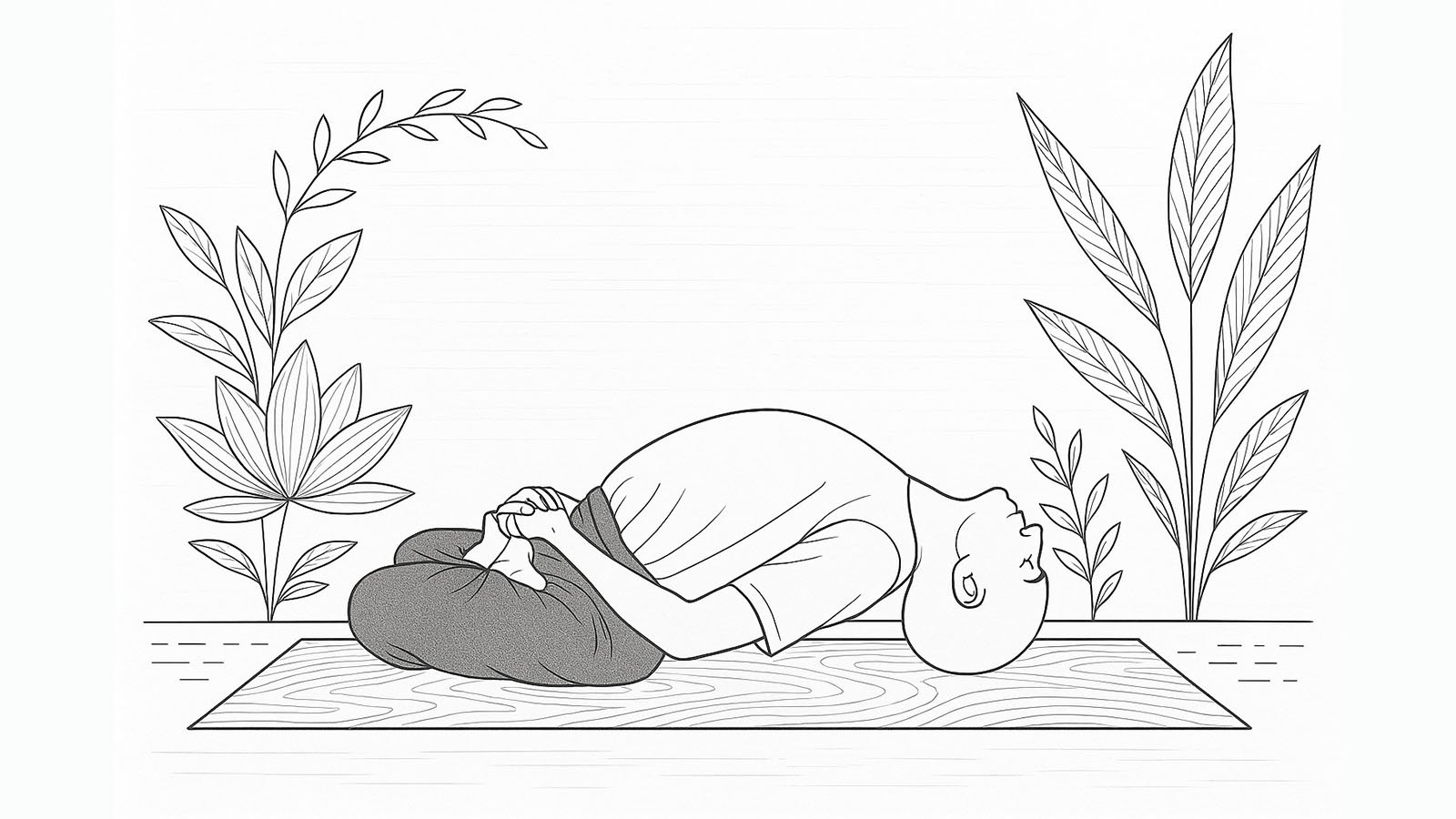
    Matsyasana (मत्स्यासन), or the Fish Pose, is a revered posture in the yogic tradition, often described as the asana that floats the body in the vast ocean of consciousness. Its name stems from the Sanskrit word “Matsya” meaning fish, symbolizing both fluidity and transcendence. In mythology, Lord Vishnu is said to have taken the form of a fish to save the ancient scriptures and sages from a great flood — a metaphor for the awakening of knowledge from the depths of stillness. Practicing Matsyasana is thus a symbolic act of returning to the oceanic wisdom within, where breath becomes the current and awareness becomes the vessel.

    Performed as a reclining backbend, this asana expands the chest, elevates the sternum, and directs prana to the heart (Anahata) and throat (Vishuddhi) chakras. The deep arch of the upper spine encourages emotional release, communication clarity, and a profound sense of inner openness. Traditionally, it is also the counterpose to Sarvangasana (सवाँगासन), helping to balance the pressure in the neck and throat region by stretching and stimulating it.

    But beyond the anatomical effects, Matsyasana is a subtle energetic opening — a conscious surrender to grace. As the heart lifts skyward and the crown tilts back, the practitioner finds themselves suspended between earth and ether, embodying the stillness of the floating fish and the expansiveness of spiritual awakening. In this serene expansion lies the essence of Yog — a union of strength, surrender, and silence.

    — Step-by-step Instructions :

    1. Sit in Padmasana (Lotus Pose), with both feet placed on opposite thighs.
    2. Slowly begin to lean backward, supporting yourself on the elbows and forearms.
    3. Gradually lower the upper back and arch the spine, allowing the crown of the head to lightly touch the floor.
    4. Ensure that the weight is supported by the elbows, not the head.
    5. Cross your arms and reach for the opposite toes — hold the right big toe with the left hand and the left big toe with the right hand, if possible.
    6. Take a deep inhalation and expand the chest, lifting the sternum upward.
    7. Hold the breath inside (Antar Kumbhaka) for a few seconds or as long as is comfortable, keeping the knees grounded.
    8. Focus on smooth breath awareness and hold the posture for 15 to 60 seconds.
    9. To release, exhale gently, release the toe grip, lift the torso using elbows, and return to sitting.
    10. Unfold the legs from Padmasana and relax.

    — Physical And Mental Benefits :

    • Expands the chest and rib cage, improving lung capacity
    • Stimulates the thyroid and parathyroid glands
    • Enhances spinal flexibility, especially in the thoracic region
    • Opens the Anahata (heart) and Vishuddhi (throat) chakras
    • Relieves tension in the neck, shoulders, and upper back
    • Acts as a counterpose to shoulder stand, balancing blood flow
    • Calms the mind and supports emotional release and expression

    — Precautions to Keep in Mind :

    • Avoid if you have serious neck or back injuries
    • Individuals with high or low blood pressure should consult a teacher before attempting
    • People with migraine, vertigo, or glaucoma should refrain from deep head tilt
    • Women during pregnancy or menstruation should avoid this pose
    • Never rest full body weight on the crown of the head

    — Beginner’s Tips :

    • Start with a folded blanket under the upper back for support
    • Keep the elbows close and active to support the weight
    • Use a yoga block under the upper back if flexibility is limited
    • Focus on lifting the chest, not collapsing into the neck
    • Practice with eyes closed for deeper inward focus

    — Best Time to Practice :

    • Best practiced in the morning after Sarvangasana (सवाँगासन)
    • Can be included in a backbend or chakra awakening sequence
    • Avoid practicing immediately after meals
    • Ideal time: early morning or evening on an empty stomach

     — Advanced Variations :

    • Extend the arms overhead for deeper thoracic opening

    — Wrapping Up :

    Matsyasana is not merely a posture of flexibility—it is a sacred gesture of openness and surrender. By expanding the chest and stimulating vital energy centers, it brings clarity to thought, freedom to breath, and depth to awareness. Like the divine fish of yogic mythology, the practitioner learns to swim through the waves of illusion, floating effortlessly on the still waters of inner truth. Through Matsyasana, the yogi rediscovers the sacred space within the heart—boundless, buoyant, and filled with light.

  • Gomukhasan गोमुखासन (Cow Face Pose)

    Gomukhasan गोमुखासन (Cow Face Pose)

    — Introduction :

    Gomukhasana (गोमुखासन), meaning Cow Face Pose, is a classical seated asana that symbolizes both humility and harmony within the practitioner. The name is derived from the Sanskrit words “Go” meaning cow and “Mukha” meaning face, as the positioning of the knees stacked over one another resembles the broad snout of a cow, while the arms reaching behind the back mirror its ears.

    Beyond its symbolic form, Gomukhasana invites the yogi to sit in perfect stillness, cultivating a posture where opposites are balanced: tight hips with open shoulders, earthly grounding with upright alertness, and outer stillness with inner expansion. It is both a physical and subtle alignment — where the spine ascends effortlessly and the breath flows freely between the locked joints. Traditionally, this asana is seen as a tool to release stored emotions in the hips and shoulders, two primary areas where the body tends to hold unresolved tension.

    From a spiritual lens, Gomukhasana helps awaken sushumna nadi by establishing a firm base through the sitting bones while aligning the spine like a central axis. The pose encourages the practitioner to bring together the lunar (left) and solar (right) energies symbolized by the crossed legs and bound arms. As the heart center gently opens and the breath deepens, the yogi begins to feel a return to simplicity, surrender, and sattva — the serene stillness that lies beyond effort.

    — Step-by-step Instructions :

    1. Sit on the floor with your legs extended forward in Dandasana.
    2. Bend the left leg, bringing the left heel under the right buttock.
    3. Now bend the right leg and place it over the left, so that the right knee stacks directly above the left knee. Both feet should rest beside the hips.
    4. Stretch your right arm up, bend the elbow, and take the hand down behind the back.
    5. Simultaneously, bring your left arm behind from below and clasp the fingers of both hands behind your back (or use a strap if necessary).
    6. Keep the spine erect, chest open, and head facing forward.
    7. Breathe slowly and deeply, maintaining the posture for 30 seconds to 1 minute or more.
    8. To release, gently let go of the hands and straighten the legs.
    9. Repeat the same steps on the opposite side, switching arm and leg positions.

    — Physical And Mental Benefits :

    • Deeply opens the hips and shoulders
    • Improves posture and spinal alignment
    • Enhances shoulder joint mobility and relieves stiffness
    • Stretches the chest, arms, thighs, and ankles
    • Activates and aligns the chakras, especially the heart (Anahata) and root (Muladhara)
    • Helps release emotional tension stored in the joints
    • Induces a meditative state and improves focus

    — Precautions to Keep in Mind :

    • Avoid if you have severe knee, hip, or shoulder injuries
    • Those with frozen shoulder should modify with a strap or avoid full bind
    • Not recommended for individuals with sciatica or inflamed joints
    • Women during pregnancy or menstruation should consult guidance before practicing
    • Always warm up the shoulders and hips before deep practice

    — Beginner’s Tips :

    • Use a strap or towel to bridge the gap between the hands
    • Sit on a folded blanket or bolster to ease knee pressure
    • If the knees don’t stack, focus on alignment and breath rather than force
    • Practice shoulder openers and hip stretches regularly to improve flexibility
    • Close the eyes and hold the posture with gentle inner awareness

    — Best Time to Practice :

    • Ideal during early morning or evening practice
    • Can be practiced before or after pranayama or meditation
    • Best done on empty stomach or 3–4 hours after a meal

     — Advanced Variations :

    • Fold forward from the hips to deepen the hip stretch (Gomukhasana forward bend)

    — Wrapping Up :

    Gomukhasana is more than a physical pose — it is an offering of the self into stillness. As the knees align and the arms bind, the practitioner experiences the gentle unraveling of resistance and the rising of clarity. It is a space where the external structure nurtures internal freedom, guiding the yogi toward a place of steadiness and spiritual receptivity. In the calm face of this asana lies the spirit of Yog — rooted, open, and ready to receive.

  • Vakrasan (वक्रासन) (Simple Twist)

    Vakrasan (वक्रासन) (Simple Twist)

    — Introduction :

    Vakrasana (वक्रासन), the Twisted Pose, is a graceful seated posture that embodies the essence of yogic subtlety — where movement is minimal but transformation runs deep. The term “Vakra” means twisted or curved, and true to its name, this asana involves a simple spinal twist that gently massages the inner organs and activates the core energy channels. Though outwardly uncomplicated, Vakrasana carries within it the timeless principle of Yog: to turn inward, to spiral toward the center of self-awareness.

    This posture invites the practitioner to sit in stillness, stabilize the body, and mindfully rotate the spine—allowing each vertebra to breathe and align. The twisting motion stimulates the digestive and eliminative systems, wrings out stagnation from the abdominal region, and encourages pranic flow along the Ida and Pingala nadis. As the gaze turns over the shoulder and the body holds its quiet spiral, a yogi begins to perceive the deeper rhythm of life: how flexibility, focus, and breath can transform even the smallest of movements into spiritual practice.

    Vakrasana is particularly suited for beginners, seniors, or those seeking a gentle yet effective detoxifying practice. In the teachings of the ancient yogis, twisting postures were revered for their ability to not only cleanse the body but also untangle emotional knots. Vakrasana stands as a serene example — a gentle spiral toward clarity, strength, and inner equilibrium.

    — Step-by-step Instructions :

    1. Sit comfortably on the floor with legs extended forward.
    2. Bend your right leg and position the right heel beneath the left buttock.
    3. Fold your left leg, placing the left foot flat on the ground beside the outer edge of the right thigh.
    4. Reach the left hand across and hold the left big toe from the inner side of the leg.
    5. Gently twist your torso to the right, and place your right palm on the floor behind you in such a way that the palm, right knee, and right buttock are aligned in a straight line and equidistant.
    6. Turn your head toward the right shoulder, keeping your gaze forward in the direction of the twist.
    7. Maintain slow, deep, and natural breathing throughout the posture.
    8. Hold the pose for up to five minutes, depending on your comfort and stability.
    9. To practice on the other side, gently release the posture and reverse the position of the legs and arms.
    10. Repeat the same steps and hold the alternate posture for another five minutes.

    — Physical And Mental Benefits :

    • Improves spinal flexibility and alignment
    • Stimulates digestive organs, enhances metabolism
    • Tones abdominal muscles and strengthens the obliques
    • Aids in detoxification by massaging liver, kidneys, intestines
    • Calms the nervous system and improves concentration
    • Helps release stored emotions and mental tension

    — Precautions to Keep in Mind :

    • Avoid during pregnancy or menstruation due to abdominal pressure
    • Not suitable for those with slipped disc, severe spinal injuries, hernia, or abdominal surgery
    • People with high blood pressure should twist gently and avoid holding breath
    • Elderly or those with limited mobility should perform with guidance

    — Beginner’s Tips :

    • Keep the spine tall and chest open; don’t hunch forward
    • Use a yoga strap or cushion under the hips for better support
    • If holding the foot is difficult, simply wrap the arm around the knee
    • Focus on gentle twisting from the base of the spine, not the shoulders alone

    — Best Time to Practice :

    • Early morning on empty stomach for detox benefits
    • Can also be done in evening, at least 3 hours after meals
    • Avoid immediately after eating or before bed

     — Advanced Variations :

    • Practice Ardha Matsyendrasana for a deeper twist

    — Wrapping Up :

    Vakrasana offers a simple doorway to deep transformation. It teaches that even small movements, when done with full awareness and breath, can stir the flow of prana and open energetic locks within. Whether used as a preparatory practice or as a standalone asana, Vakrasana is a valuable companion on the yogic path—balancing the spine, energizing the core, and refining one’s inner focus. In the spiral of this posture lies the spiral of life itself — ever turning, ever unfolding.