Blog

  • MITAHAAR (The Art of Balanced Diet)

    MITAHAAR (The Art of Balanced Diet)

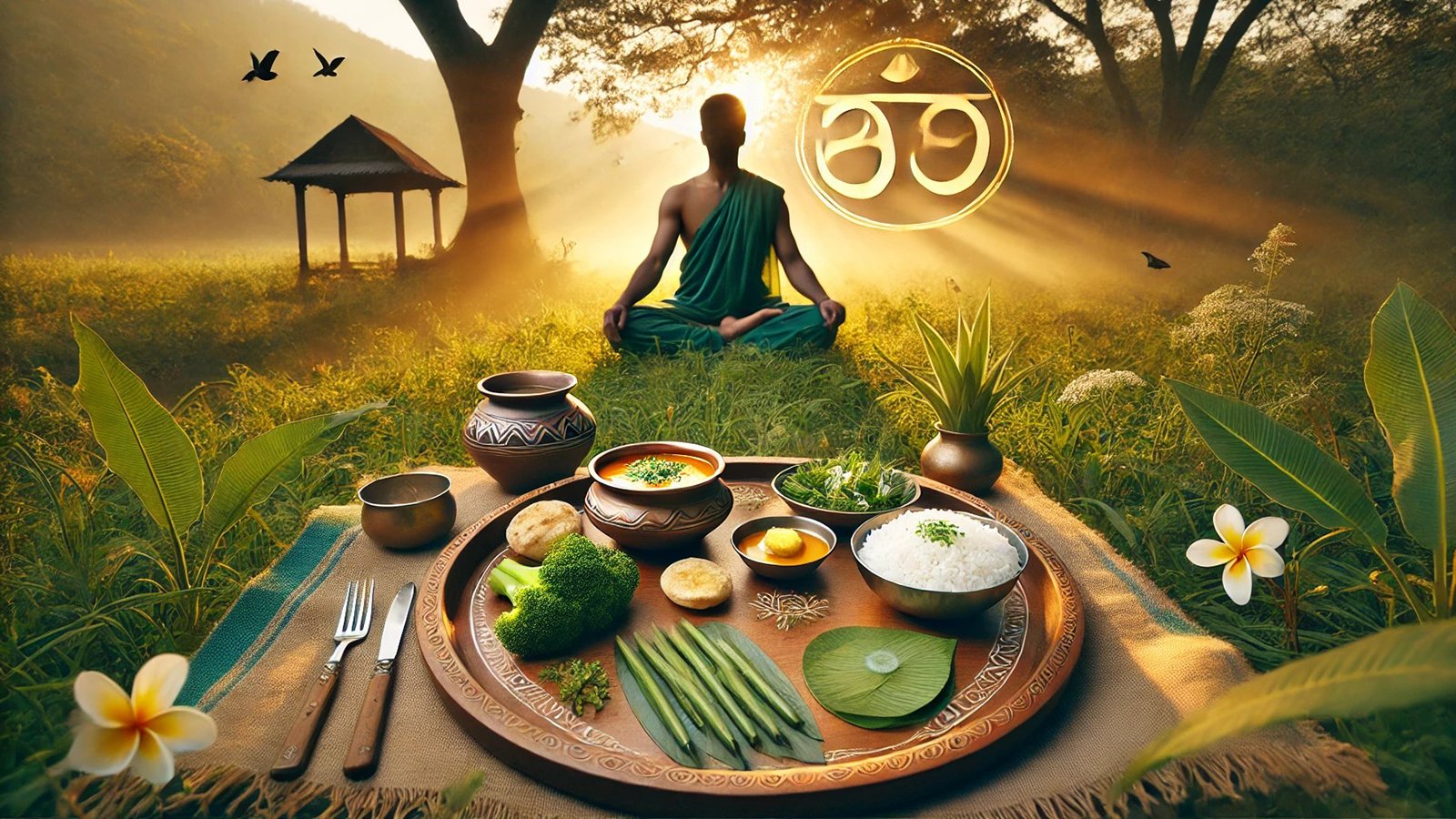
    While all Yams and Niyams are immensely valuable for both everyday individuals and dedicated yog practitioners, the ancient Yog scriptures place special emphasis on Mitahaar, or moderate and mindful eating, especially at the initial stages of one’s Yogic journey. This concept of Mitahaar is not just about dietary restrictions but is deeply rooted in the holistic philosophy of maintaining balance and discipline in life.

    In the path of spiritual practice, the human body is considered the primary tool or instrument. Just as a musician needs a well-tuned instrument to produce beautiful music, a Yog Sadhak (seeker of Yog) requires a healthy and pure body to progress spiritually. If the body is afflicted by illness, imbalance, or impurity, even the greatest material comforts or achievements cannot bring true happiness or peace.

    Therefore, maintaining good health is not just a prerequisite for spiritual advancement, but also essential for experiencing overall well-being in everyday life. It is in this context that Mitahaar becomes crucial—not just for those pursuing deep Yogic practices but also for ordinary individuals striving to live a balanced and content life.

    Mitahaar encourages the consumption of food in the right quantity, at the right time, and with the right attitude. It promotes sattvic (pure and balanced) food that nourishes the body and calms the mind. As we proceed, let us explore and understand in depth what Mitahaar truly means, and how it can become a guiding principle for a healthier and more harmonious life.

    — What is MItahaar? —

    The term “Mitahaar” is derived from two Sanskrit words: “Mit”, meaning moderation, and “Aahaar”, meaning food or diet. Thus, Mitahaar refers to moderate or balanced eating. The concept and definition of Mitahaar are elaborated in the ancient yogic text, the Hathyog Pradipika, highlighting its spiritual importance.

    सुस्निग्धमधुराहारश्चतुर्थांशविवर्जितः।
    भुज्यते शिवसंप्रित्यै मिताहारः स उच्यते॥

    Means, To please one’s soul and body, with an offering to Lord Shiv, it is advised to eat delicious, lightly oily food that satisfies only three-quarters of one’s hunger. This practice is called Mitahaar, meaning moderate or abstemious eating. The scriptures further explain the proper way to follow Mitahaar, emphasizing balance and mindfulness in eating to promote well-being and inner harmony.

    द्वौभागौ पुरयेदन्नैः तोयेनेकं प्रपुर्येत्।
    वायोः संचारार्थं चतुर्थं अवशेष्येत॥

    Means, Abstemious feeding, known as Mitahaar, involves filling half of the stomach with solid food, one-quarter with liquids, and leaving the remaining one-quarter empty to allow proper circulation of air (Vayu). This balanced approach helps maintain digestive health and overall well-being. The ancient yogic text Gherand Samhita emphasizes this practice, highlighting the importance of mindful eating to support both physical health and spiritual progress on the path of Yog.

    शुद्धं सुमधुरं स्निग्धं उदरार्धविवर्जितम्।
    भुज्यते सुरसंप्रीत्या मिताहारमिमं विदुः।
    अन्नेन पुरयेदर्धं तोयेन तु तृतीयकम्।
    उदरस्य तुरीयांश संरक्षेद्द दायुचरणे॥

    Means, Mitahaar refers to eating in a balanced and mindful manner, where only half of the stomach is filled with nourishing, pure, delicious, and slightly greasy food. The remaining half is kept vacant to maintain proper digestion and health. Of the vacant half, one-quarter is filled with water or liquids, while the final quarter is intentionally left empty. This disciplined approach helps regulate the body’s internal functions and supports physical and mental well-being.

    — The Role of Mitahaar in Yogic Discipline —

    Lord Shri Krishna, in the Bhagavad Gita, states:

                                           “समत्वं योग उच्यते”
                                        Equanimity is called Yog.

    This highlights that balance is at the very heart of Yogic practice — and that includes balanced eating.

    For a Yog Sadhak (practitioner), maintaining Mitahaar — a moderate and mindful diet — is essential. One should neither overeat nor eat too little. Both extremes disturb the physical and mental balance needed for spiritual growth.

    Shri Krishna further emphasizes in the Bhagavad Gita that:

    युक्ताहारविहारस्य युक्तचेष्टस्य कर्मसु।
    युक्तस्वप्नावबोधस्य योगो भवति दुःखहा॥ (६/१७)

    Meaning, Yog becomes difficult and even harmful for those who do not maintain balance in their diet, lifestyle, sleep, and daily routine. Without proper regulation of these basic habits, the mind and body cannot support the discipline required for Yog. Therefore, harmony in one’s way of living is essential. This principle is also emphasized by Maharishi Gheranda, who stressed the importance of balance as a foundation for successful Yogic practice and spiritual development.

    मिताहारं विनायस्तु योगारंभं तु कारये।
    नानारोगो भवेतस्य किंचिद् योगो न सिद्ध्यति॥

    If one begins the practice of Yog without observing Mitahaar—moderate and mindful eating—there is a high chance of developing various diseases, making the path to spiritual success nearly impossible. Both overeating and under-eating must be avoided by a sincere Yog practitioner. Maintaining dietary balance is essential for progress. This very principle is also mentioned in the Amritbindu Upanishad, which emphasizes the importance of controlling food habits in the journey of Yogic discipline.

    अत्याहारमनाहारं नित्यं योगी विवर्जयेत्।

    Meaning, a yogi should always avoid both overeating (atyahar) and complete fasting (anahar).

    — The Vital Role of Food in Life —

    The human body is composed of countless cells that generate energy through the food we consume. Recognizing this essential truth, Lord Shri Krishna also emphasized in the Bhagavad Gita the vital role of food in sustaining life and supporting bodily functions, reinforcing its importance in human existence and spiritual practice.

    अन्नाद्भवन्ति भूतानि।

    Food is the fundamental source of sustenance for all living beings, especially for the human body, which cannot survive without it. Regular nourishment is essential to maintain strength and vitality. Prolonged fasting or insufficient intake weakens the body, making it lethargic and prone to illness. It is through proper food that the body develops immunity and remains active. However, the quantity and quality of food must be appropriate. Improper or excessive intake leads to various diseases. Therefore, a Yog practitioner must follow a strict and Sattvik Mitahaar—pure and moderate diet. Lord Shri Krishna, in the Gita, describes the nature of Sattvik food.

    आयुः सत्त्वबलारोग्यसुखप्रीति वर्धनाः।
    रस्याः स्निग्धाः स्थिरहृद्या आहाराः सात्त्विकप्रियाः॥ (૧૭/૮)

    Individuals who possess a sattvik (pure and balanced) nature prefer food that supports longevity, enhances vitality, builds strength, and promotes health, happiness, and inner contentment. Such foods are naturally tasty, juicy, nourishing, and easy to digest. Food plays a crucial role in sustaining human life, but it must be consumed with awareness and discipline. When there is carelessness or a lack of restraint in eating habits, it can lead to the deterioration of one’s health, reduce life span, and diminish both physical and mental strength. Therefore, the right choice and amount of food are essential for maintaining a healthy and meaningful life.

    — Effects of Mitahaar in Mind-Body Wellness —

    Overeating, especially when practiced habitually, often leads to obesity, which becomes a serious obstacle not only in daily life but also in the disciplined path of Yog. While an overweight person may perform well in business or social roles, the physical demands and mental clarity required for yogic practices become difficult to attain with a heavy body. Obesity typically brings along fatigue, lack of energy, and reduced flexibility. Even simple movements like sitting on the floor for extended periods or standing up without support can feel exhausting and painful.

    Moreover, obesity is often a result of compulsive eating, driven not by hunger but by cravings. Such behavior reflects a loss of mindful connection with food and bodily needs. It is, therefore, misguided and even disrespectful to the discipline of Yog to label someone with a large, inactive body as a true Yogi, as Yog is a union of awareness, moderation, and inner discipline.

    In today’s world, many people suffer from sluggishness, low enthusiasm, and poor focus. A primary cause behind this is excessive food intake. Constantly indulging in spicy, oily, salty foods without chewing properly or respecting the stomach’s capacity disrupts digestion, weakens immunity, and leads to chronic ailments. Physically, it results in poor posture, fatigue, and inflammation; mentally, it leads to restlessness, lethargy, and reduced concentration.

    According to Ayurved, a healthy person maintains a balance of the three gunas—Sattva (clarity), Rajas (activity), and Tamas (inertia). Overeating disturbs this balance by increasing Rajas and Tamas, leading to mental agitation, excessive sleep, bodily stiffness, laziness, increased sexual urges, and emotional instability. It also contributes to serious health issues such as diabetes, high blood pressure, kidney disorders, and more. The body loses its flexibility and grace, while the mind becomes clouded, egoistic, and impatient.

    Thus, moderation in eating—Mitahaar—is not just a yogic ideal but a vital foundation for a healthy, energetic, and spiritually attuned life.

    — Mitahaar is not Easy —

    Among all the Yams and Niyams, Mitahaar may appear simple in theory, but in actual practice, it is one of the most difficult to follow. Interestingly, fasting is often easier than Mitahaar. When fasting, we simply avoid food altogether, eliminating the need to make choices. However, in Mitahaar, we must mindfully select what to eat and how much to eat, even when all types of food are available in front of us.

    The challenge lies in the discipline of moderation. One must eat not out of desire, but with awareness of what the body truly needs. In the journey of Yog Sadhana, progress is impossible without mental control and regulated eating habits. Our taste buds are easily tempted, especially when delicious and rich foods are served. The desire to indulge can quickly overpower our intentions.

    Thus, without strong willpower, Mitahaar cannot be sustained. It demands a high level of inner discipline, clarity, and restraint. Practicing Mitahaar is not just about what is on the plate—it is a test of the mind’s control over the senses.

    — Mitahaar Should Be Practiced for a Lifetime —​

    The path of Yog Sadhana is not short or temporary—it is a lifelong journey of discipline, awareness, and transformation. Anyone who truly wishes to walk this path must adopt Mitahaar not as a short-term effort but as a lifelong commitment. It is not enough to practice mindful eating for a few days, weeks, or even months. The practice of Mitahaar must be integrated deeply into one’s daily life.

    A sincere seeker should understand clearly that Mitahaar is not optional, but an essential discipline that supports the goal of Yog. Only when the diet is pure, balanced, and moderate can the body remain healthy, the mind steady, and the senses under control—qualities vital for spiritual growth.

    Therefore, Mitahaar must be observed with firm determination and consistency throughout the entire span of Yogic practice. It is a fundamental part of the lifestyle that leads a seeker toward self-realization and inner peace. Without it, the journey remains incomplete.

    — Sattvik Aahar for Sadhak —​

    Just as there are different types of waste—some that are easy to clean and others like plaster of Paris that require tools and effort—the same analogy applies to the food we consume. Foods that are heavy and hard to digest act like stubborn waste within the body, clinging to the walls of the intestines and obstructing the system. A Yog Sadhak should choose food that is easily digestible and can be eliminated without burdening the body.

    Even substances that are easy to chew can harm the body when consumed in excess. Spices, for example, enhance flavor but when overused, they cause acidity, inflammation, and infections in the digestive tract. A Sadhak should use spices sparingly, only to make food agreeable, and must avoid excessive chili consumption.

    Often, our eating choices are shaped by habit, not necessity. With firm resolve and gradual practice, we can learn to enjoy food in its pure, unadulterated form. The core issue is not taste, but the nature of our habits.

    That’s why ancient Yogis have advised practitioners to consume food that is pure, nutritious, soft, sweet, pleasant, mildly oily, and agreeable. At the same time, they recommend avoiding foods that are acidic, salty, bitter, pungent, excessively roasted, or artificially flavored. Additionally, smoking, tea, coffee, alcohol, and such stimulating beverages should be completely avoided. On the other hand, milk and ghee are highly beneficial and recommended for those devoted to Yogic practice.

    — Scientific Basis of Mitahaar —​

    In today’s modern world, many people tend to dismiss ancient scriptural wisdom, preferring scientific validation instead. However, we often overlook the fact that our ancient sages were truth-seeking scientists in their own right. Their teachings, based on deep observation and inner experience, are now being confirmed by modern research.

    Several scientists across the world have conducted experiments that align with the principle of Mitahaar (moderate eating). Japanese scientist Tomiyoda discovered that moderate hunger increases muscular agility and sharpens mental focus—a concept long emphasized in yogic texts, where it is stated that one should eat tasty, nourishing food to fill only three-fourths of the stomach, offering it with devotion to Shiv.

    Another researcher, Lucian H. Warner, found that satisfying thirst reduces the intensity of hunger, which supports the Ayurvedic practice of drinking water in small amounts between meals. This practice naturally ensures that only three-fourths of the stomach is filled—thus fulfilling the principle of Mitahaar.

    American scientist Walter R. Miles conducted experiments where young individuals followed Mitahaar and observed that sexual desire decreased, while muscular efficiency improved. This directly corresponds with yogic teachings that moderation in diet helps in preserving Brahmacharya (celibacy) and contributes to spiritual advancement.

    However, it is important to distinguish Mitahaar from disorders like anorexia. In anorexia, appetite diminishes due to weakened digestion or psychological reasons. Mitahaar, on the other hand, is a voluntary, conscious practice of eating in moderation, leaving one-fourth of the stomach empty to support health, clarity, and spiritual progress.

    — Wrapping Up : Mitahaar (The Art of Balanced Diet) —

    Mitahaar, or moderate eating, is one of the most essential yet often overlooked disciplines on the path of Yog Sadhana. It is not just about limiting the quantity of food but about cultivating awareness, balance, and purity in what we consume. Ancient scriptures and yogic masters have placed great emphasis on Mitahaar, considering it the foundation for a calm mind, healthy body, and disciplined life. Even modern science supports these principles, showing how mindful eating enhances physical energy, mental clarity, and emotional stability.

    A Sadhak must understand that without control over diet, progress in yog remains limited. Mitahaar helps control desires, aids digestion, strengthens immunity, and preserves Brahmacharya, which is vital for spiritual development. It prevents laziness, restlessness, and health complications caused by overeating or poor food choices.

    Importantly, Mitahaar is not a temporary practice. It must become a way of life—a conscious choice sustained by determination and inner strength. Though difficult at first, it gradually transforms into a natural habit, supporting one’s physical well-being and spiritual journey.

    In essence, Mitahaar is more than a dietary rule—it is a spiritual discipline that purifies the body, sharpens the mind, and opens the heart to deeper states of awareness.
  • YAM-NIYAM (The Yogi’s Code of Conduct)

    YAM-NIYAM (The Yogi’s Code of Conduct)

    — What is Yam-Niyam —

    In simple terms, Yam-Niyam refers to the guidelines of what to follow and what to avoid—essentially, the Do’s and Don’ts (Vihit Karma and Nishiddh Karma). These principles are not only central to Ashtang Yog but are also fundamental to all ancient systems of yog. They serve as the essential groundwork for a meaningful yogic journey.

    Yam refers to voluntary restraint or self-control. In the context of yog, it extends beyond personal discipline and is deeply tied to one’s ethical and social conduct. Yama are moral guidelines or codes of behavior that promote restraint and instill ethical values. Because they guide external conduct and purity, they are often considered laws of moral discipline. Practicing Yam brings harmony and well-being both to the individual and to society at large.

    Niyam means discipline, observance, or internal regulation. In yog, it refers to the inner discipline applied to both body and mind. Niyams are personal ethical codes intended to cleanse mental and physical impurities. Their practice supports physical health, mental clarity, and inner peace. Together, Yam and Niyam help avoid harm to the body and mind, and they cultivate qualities such as selflessness, discipline, inner joy, focused concentration, and spiritual strength. Ultimately, they lead the practitioner toward self-mastery and self-realization—the true goal of yog.

    — Yam-Niyam: The Yogi’s Code of Conduct —

    Yam and Niyam form the ethical foundation of a yogic lifestyle, serving as a code of conduct prescribed by ancient sages for the overall well-being of humanity. Their observance benefits not only dedicated yog practitioners but also common individuals seeking a balanced life.

    Yam, which focuses on moral discipline and social behavior, plays a crucial role in purifying one’s actions and interactions. It is often regarded as a form of social ethics or religion.
    Niyam, on the other hand, is centered on personal discipline and internal purification, acting as a powerful tool for self-development and refinement.

    Although distinct in their focus—Yam relating to morality and Niyam to self-discipline—they are deeply interconnected. Morality is nurtured through disciplined conduct, and disciplined conduct is strengthened by moral intention. Together, they form an inseparable framework that supports personal and spiritual growth.

    Pure behavior stems from pure thoughts, and pure thoughts are cultivated through ethical and disciplined living. A life lacking in discipline and morality inevitably leads to suffering in the form of mental, physical, or spiritual disturbances (Aadhi, Vyadhi, and Upadhi). Therefore, anyone committed to serious yogic practice (Sadhana) must embrace Yam and Niyam with sincerity and dedication.

    The World Health Organization now defines health as “a state of complete physical, mental, social, and spiritual well-being—not merely the absence of disease.” By this definition, true health is rare. However, the consistent practice of Yam and Niyam offers a reliable path to achieving this ideal state. Only through them can one attain comprehensive physical vitality, mental clarity, social harmony, and spiritual upliftment.

    — Yam-Niyam in Various Yogic Texts —

    1. Yam (Restraints or Ethical Disciplines)

    The concept of Yam is well-documented across several ancient yogic texts. A total of 18 Yams are mentioned collectively in scriptures such as the Trishikhibrahmanopanishad, Jabaldarshanopanishad, Shandilyopanishad, Yogadarshanopanishad, Varahopanishad, Yogiyajnavalkya, Hathayogapradipika, and Vasisthasamhita.

    These include: 1) Truth (Satya), 2) Non-violence (Ahimsa), 3) Non-stealing (Astey), 4) Celibacy (Brahmacharya), 5) Forgiveness (Kshama), 6) Patience (Dhruti), 7) Kindness (Daya), 8) Simplicity (Aarjav), 9) Moderation in diet (Mitahar), and 10) Cleanliness or Purity (Shauch).

    Other texts mention fewer Yams.

    Shiv Samhita includes seven Yams, excluding Daya, Aarjav, and Shauch.

    Patanjali’s Yogasutras identify five Yams — Ahimsa, Satya, Astey, Brahmacharya, and Aparigrah (non-possession).

    Yogatattv Upanishad lists only two Yams: Ahimsa and Mitahar.

    Gorakshasamhita also mentions two — Brahmacharya and Mitahar. Some texts like the

    Yogakundalupanishad, Dhyan Bindu Upanishad, and Gheranda Samhita refer to just one Yam each: Brahmacharya in Dhyan Bindu, and Mitahar in the other two.

    Even the Bhagavad Gita references the importance of Mitahar in yogic life.

    2. Niyam (Personal Disciplines or Observances)

    In parallel, the concept of Niyam focuses on personal discipline and internal purification. A set of 10 Niyams is found in texts such as the Shandilyopanishad, Yogadarshanopanishad, Varahopanishad, Yogiyajnavalkya, and Vasisthasamhita.

    These are: 1) Contentment (Santosh), 2) Austerity (Tap), 3) Worship of God (Ishwar Pranidhan), 4) Faith (Aastikya), 5) Charity (Daan), 6) Listening to Scriptures (Siddhant Shravan), 7) Remorse or inner shame (Hrim), 8) Spiritual intellect (Mati), 9) Chanting of mantras (Jap), and 10) Observing vows (Vrat).

    Hath Yog Pradipika excludes Jap and Vrat, but adds Hom (fire ritual), presenting nine Niyams.

    Trishikhibrahmanopanishad lists eight Niyams, excluding Mati and Vrat.

    Jabaldarshanopanishad mentions six Niyams, the first six from the list above.

    Shiv Samhita names five Niyams from the main set — Tap, Siddhant Shravan, Hrim, Mati, and Jap — and also adds four more: Hom, Guru devotion (Gurubhakti), Detachment (Vairagya), and Purity (Shauch), making a total of nine Niyams.

    Mandalabrahmanopanishad describes six Niyams: Santosh, Aastikya, Gurubhakti, Vairagya, Solitude (Ekantvaas), and Renunciation of desire (Falechchha Tyag).

    Together, these detailed lists of Yams and Niyams across different texts illustrate their vital role in shaping a practitioner’s ethical and personal discipline. They are foundational elements that lead to purification of body and mind, ultimately guiding the seeker toward spiritual growth and self-realization.

    — Types of Yam and Niyam Mentioned
    by Maharishi Patanjali —

    Maharishi Patanjali, in his renowned work Yog Sutras, has classified the foundational principles of ethical living into five primary Yams and five primary Niyams. These ten disciplines form the moral and personal code of conduct essential for any sincere yog practitioner. The Yams represent the social and ethical restraints that guide our interactions with others, while the Niyams focus on personal discipline and internal growth.

    Patanjali emphasized these tenets as the first two limbs of the eightfold path (Ashtang Yog), which ultimately leads to spiritual liberation. While these core principles form the basis of yogic discipline, several other ancient yogic scriptures have elaborated upon them and introduced additional or secondary Yams and Niyams. These variations highlight the depth and diversity of yogic teachings found across different traditions. In the following sections, we will first explore the Yams and Niyams as defined by Maharishi Patanjali and then delve into the additional interpretations presented in other important yogic texts.

    — Main Yam —

    As stated above, Yam refers to ethical restraints or moral disciplines that guide a yog practitioner’s behavior in society. It is the first limb of Patanjali’s Ashtang Yog and lays the foundation for spiritual growth and inner peace. Yam emphasizes self-control and promotes values that foster harmony in human interactions. The five core Yams defined by Maharishi Patanjali are: Ahimsa (non-violence), Satya (truthfulness), Astey (non-stealing), Brahmacharya (celibacy or moderation), and Aparigrah (non-possessiveness). Practicing Yam purifies thoughts, speech, and actions, enabling one to lead a righteous life. It cultivates discipline, compassion, and moral strength essential for deeper yogic practices.
    Let us now learn each of these Yams in detail.

    1) Ahimsa (Non-violence)

    Ahimsa, or non-violence, is one of the most fundamental principles in the yogic path and means abstaining from causing harm to any living being through thoughts, words, or actions. This includes not only refraining from physical violence but also avoiding verbal abuse, harsh criticism, and negative or hostile thinking. True Ahimsa requires a commitment to kindness, compassion, and understanding toward all beings—whether they are humans, animals, or even insects. It encourages us to be mindful of our behavior, ensuring that we do not hurt others either directly or indirectly.

    Practicing Ahimsa extends beyond mere restraint—it is a conscious effort to live harmoniously, promote peace, and embody love in our daily lives. It teaches us to respond with patience rather than anger and to cultivate forgiveness instead of revenge. This virtue nurtures emotional balance and helps dissolve feelings of hatred or resentment. Over time, Ahimsa purifies the heart, strengthens relationships, and creates a peaceful environment within and around us. It is not just a moral guideline but a transformative spiritual discipline that lays the foundation for higher yogic practices.

    2) Satya (The Truth)

    Satya, or truthfulness, is the practice of being honest and sincere in thought, speech, and action. It involves refraining from deceit, manipulation, or falsehoods in any form. Practicing Satya means aligning your inner thoughts with your spoken words and outward actions, ensuring there is harmony between what you think, say, and do. It also requires mindfulness and restraint, as one must avoid exaggerations, lies, or harmful truths that might hurt others unnecessarily. The essence of Satya lies not only in speaking the truth but in doing so with kindness, clarity, and compassion.

    Living truthfully nurtures positive relationships, builds trust, and strengthens moral character. It also purifies the mind and heart, making space for peace and spiritual growth. As one practices truthfulness regularly, the Sattva Gun—or purity and clarity of consciousness—begins to grow. With the rise in sattva, a person experiences greater calmness, improved focus, and the unfolding of deeper mental and spiritual abilities. Satya thus becomes not just a moral ideal, but a path toward inner transformation and lasting peace.

    3) Astey (Non stealing)

    Astey, which means non-stealing, is the moral commitment to not take anything that does not rightfully belong to you. The word “Stey” refers to stealing, while “Astey” is its opposite—abstaining from theft in all forms. This includes not only physical possessions but also ideas, time, credit, or opportunities that belong to others. Even desiring or intending to take something without the owner’s permission violates the principle of Astey. It encourages integrity and respect for others’ boundaries, property, and efforts.

    At its root, the tendency to steal often arises from feelings of greed, insecurity, or envy. By cultivating contentment and gratitude, one can reduce these negative impulses and follow the path of Astey with greater ease. A person who lives by this principle earns trust and respect in society. Stealing, on the other hand, damages one’s self-esteem and social reputation, and it creates inner unrest. Observing Astey clears the way for self-growth, mental peace, and the development of a noble character.

    4) Brahmcharya (Celibacy)

    Brahmacharya, often translated as celibacy or self-restraint, refers to the conscious renunciation of sexual indulgence through thought, speech, and action. In the yogic tradition, Brahmacharya is not merely the absence of sexual activity but a disciplined way of living that conserves and redirects one’s vital energy (ojas) toward higher spiritual pursuits. For yog practitioners, this means rising above sensual desires and focusing on inner growth. It involves mastering one’s impulses and living with awareness, purity, and discipline.

    While complete celibacy is often recommended for ascetics and advanced spiritual seekers, even householders are advised to exercise moderation and control over their senses. This restraint strengthens the mind, protects physical vitality, and promotes emotional stability. When practiced sincerely, Brahmacharya fosters clarity, concentration, and spiritual awakening. On the other hand, indulgence in sensory pleasures, particularly uncontrolled sexual activity, is said to deplete one’s energy and accelerate physical and mental decline, leading to illness, aging, and untimely death.

    5) Aparigrah (Non-possession)

    Aparigrah, meaning non-possession or non-hoarding, encourages a lifestyle of simplicity, contentment, and detachment from material belongings. Derived from the root word Parigrah, which means to accumulate or collect, Aparigrah calls for a conscious refusal to acquire more than one truly needs. In the yogic path, this principle teaches the practitioner to live with minimalism and to avoid the excessive pursuit of material goods, which often stems from greed and insecurity.

    Aparigrah promotes inner freedom by reducing dependency on external objects. When one is content with what is earned through righteous means and lives without unnecessary accumulation, life becomes simpler and more peaceful. The practice of non-possession also lessens anxiety and competition, allowing the mind to turn inward. On the contrary, the habit of hoarding fosters restlessness, strengthens attachment, and ultimately leads to suffering. Ethical restraint and moderation help cultivate clarity, stability, and spiritual growth, making Aparigrah a vital support for a tranquil and focused life.

    Maharishi Patanjali referred to these five Yams as “Mahavrats,” meaning great vows. They transcend time and place, serving as universal principles that everyone should follow at all times, regardless of circumstances. These Yams are essential ethical guidelines to be practiced consistently in social life.

    — Main Niyam —

    As stated above, Niyams are personal observances or disciplines in yog that focus on self-care and inner development. They serve as guidelines for maintaining purity, contentment, and spiritual growth within oneself. The five main Niyams taught by Maharishi Patanjali include Shauch (cleanliness), Santosh (contentment), Tap (austerity), Swadhyay (self-study), and Ishvarapranidhan (surrender to a higher power). Practicing these principles helps cultivate inner peace, self-discipline, and devotion, leading to a balanced and harmonious life. Niyams complement the Yams and support the practitioner’s journey toward self-realization. Let us learn in detail about each Niyam to fully grasp their importance and how to apply them in daily life.

    1) Shauch (Purity)

    Shauch, meaning purity or cleanliness, is a fundamental principle in yog that emphasizes both physical and mental purification. Physical purity involves maintaining cleanliness of the body through regular bathing, wearing clean clothes, and following a balanced diet that nourishes and detoxifies the system. Proper eating habits and drinking pure water are essential to keep the internal organs healthy and free from toxins. This physical cleansing helps create a strong, healthy body, which is vital for sustaining rigorous yogic practices.

    Mental purification is equally important and involves cleansing the mind of negative thoughts, impurities, and distractions. This can be achieved by engaging with sacred texts, listening to the wisdom of saints or enlightened teachers, and regularly reflecting on spiritual teachings. Repetition and contemplation of these teachings help purify the mind, fostering clarity, calmness, and focus.

    Without both physical and mental purity, progress on the yogic path becomes difficult or painful. A pure body and mind create the ideal foundation for meditation, self-discipline, and spiritual growth. Therefore, practitioners are encouraged to adopt habits that promote cleanliness and purity, enabling a harmonious and fruitful yog practice.

    2) Santosh (Satisfaction)

    Santosh, or contentment, means being truly satisfied and at peace with whatever one has achieved through honest and sincere efforts. It is the ability to accept life’s circumstances without craving for more or feeling restless. Contentment brings genuine happiness because it encourages the mind to appreciate what is already present, rather than constantly seeking external possessions or achievements. This inner happiness becomes a source of strength and stability.

    There is a well-known Gujarati proverb, “Santoshi Nar Sada Sukhi,” meaning “A content person is always happy.” This highlights the timeless truth that true happiness arises not from external abundance but from an inner sense of fulfillment.

    3) Tap (Austerity)

    A key aspect of asceticism is the ability to patiently and joyfully endure both physical and mental suffering. This does not mean simply tolerating pain but embracing hardships with a calm and positive attitude. Such acceptance helps develop inner strength and resilience, which are essential qualities for anyone committed to spiritual growth and self-discipline. By facing difficulties without resistance, the practitioner cultivates a mindset that remains steady amid life’s challenges.

    Through the practice of austerities, the body and mind undergo purification, which leads to an increase in Sattva Gun — the quality of purity, harmony, and balance. This enhancement of Sattva brings about greater clarity, mental calmness, and overall well-being. With a purified and strengthened mind, the practitioner gains the mental fortitude necessary to continue the demanding journey of yog. This joyful endurance of suffering ultimately supports steady progress on the spiritual path and fosters lasting peace.

    4) Swadhyay (Study of self)

    The term “Swa” refers to one’s own soul or inner self, while “Adhyayan” means study or learning. Combined, “Svadhyay” signifies the practice of deeply studying and understanding one’s own soul. This process involves turning the mind inward, away from external distractions and sensory objects, allowing the practitioner to connect with their true inner nature. When the restless, outward-focused mind becomes calm and introspective, it creates the space for self-awareness and the exploration of one’s spiritual essence.

    Svadhyay also encompasses the disciplined study of sacred scriptures and spiritual texts that guide the seeker toward self-realization. It includes the regular practice of yog and meditation as tools to deepen this inner inquiry. Moreover, Svadhyay involves ongoing self-reflection and honest evaluation of one’s thoughts, actions, and intentions. Together, these practices nurture a deeper understanding of the self, fostering growth in wisdom and spiritual insight.

    5) Ishwar Pranidhan (Surrender to Deity)

    Ishwar refers to Sagun Brahma, or God — the supreme, all-pervading divine power that governs the universe. Pranidhan means complete surrender or wholehearted dedication. Together, Ishwar Pranidhan signifies the deep faith in God as the ultimate power, coupled with sincere worship and emotional devotion. This practice involves trusting God’s will, offering one’s actions and thoughts with reverence, and cultivating a loving connection to the divine presence in everyday life.

    Through Ishwar Pranidhan, the practitioner cultivates humility and surrender, which serve as essential steps toward spiritual liberation. It is considered the highest path to attain ‘Samadhi’ — a state of profound union and oneness with God. upon experiencing Samadhi, the seeker transcends all worldly limitations and becomes free from the bonds of nature, achieving ultimate peace and spiritual freedom.

    Maharishi Patanjali described these five Niyams as essential personal disciplines for spiritual growth. They are timeless and universal, meant to be practiced consistently regardless of place or circumstance. Niyams guide individual behavior and self-purification, helping practitioners maintain inner balance and progress on the path of yog.

    — The secondary Yam-Niyam —

    Several other ancient Yog scriptures mention additional or secondary Yams and Niyams beyond those outlined by Maharishi Patanjali. These texts expand on the principles of ethical and personal discipline, offering a broader range of guidelines for both social conduct and self-purification. They emphasize qualities such as kindness, charity, patience, and spiritual devotion, highlighting diverse paths toward self-improvement and harmony with others. Together, these secondary Yam-Niyam provide a more comprehensive framework for living a balanced and virtuous life.

    Let’s explore these qualities with short descriptions to better understand their significance and how they contribute to spiritual growth and daily life.

    — Secondary Yam —

    1) Kshama (Forgiveness):

    Forgiveness is the quality of not harboring anger or hatred towards anyone, regardless of whether they agree or disagree with one’s personal beliefs or actions. It involves cultivating patience and tolerance even in challenging situations. Forgiveness is often regarded as the mark of a courageous and strong individual, and it holds special significance for yogis on their spiritual path, as it helps to dissolve resentment and foster inner peace.

    2) Dhruti (Patience):

    Dhruti refers to the steadfast commitment to uphold virtues and temperance consistently, even when faced with difficulties or adversity. It is the ability to remain calm, composed, and dutiful under pressure without wavering. This quality strengthens one’s resolve, enabling the practitioner to persevere on the path of spiritual discipline with unwavering dedication.

    3) Daya (Kindness):

    Kindness is characterized by genuine compassion and empathy towards others as well as oneself. It means rejoicing in the happiness of others and feeling sorrow for their suffering. A kind person actively seeks to alleviate the pain of those in distress through sincere and faithful efforts, promoting harmony and goodwill in society.

    4) Arjav (Simplicity):

    Arjav signifies simplicity and honesty in mind, body, and senses. It involves living free from selfish motives, deceit, or hypocrisy. This quality encourages transparency and straightforwardness in one’s behavior, fostering trust and purity in relationships and actions.

    5) Mitahar (Moderation in Diet):

    Mitahar is the practice of eating in moderation, typically consuming slightly less than what one’s hunger demands. This mindful approach to food helps maintain a healthy and balanced body and mind, which is essential for effective yog practice and overall wellbeing. It promotes self-control and prevents overindulgence.

    — Secondary Niyam —

    1) Astikya (Theism):

    Astikya refers to having unwavering faith in the existence of God and firmly believing in the teachings of the scriptures. It also involves living life in alignment with the principles laid out in sacred texts and cultivating fear or caution towards actions forbidden by those scriptures. Such theistic conviction forms the foundation for moral and spiritual discipline.

    2) Daan (Donation):

    Daan means offering help to those in need with compassion, using wealth that has been earned through righteous means. True charity is not just about giving, but giving with a pure heart. According to scriptures, it is advised that every individual should donate at least ten percent of their income for noble and selfless causes.

    3) Siddhant Sravaṇ (Listening to Scriptures):

    This involves attentively listening to the teachings of the scriptures from a realized teacher or a knowledgeable person. It includes contemplation and reflection on the spiritual truths conveyed in those teachings. Such listening, when done sincerely, helps internalize spiritual wisdom and strengthens one’s understanding of the divine path.

    4) Hrim (Guilt/Remorse):

    Hrim is the feeling of guilt or shame after committing a wrongful act, especially in social conduct or spiritual discipline. It is not only the awareness of having done something wrong but also the sincere resolve to correct the mistake and not repeat it. This quality promotes moral integrity and inner purification.

    5) Mati (Spiritual Intellect):

    Mati is the refined intellect that guides a person towards divine realization. It involves having a clear and focused understanding of the path shown by scriptures and following it with dedication. Such an intellect is rooted in faith, discernment, and a sincere desire to attain unity with God through spiritual knowledge and practice.

    — Wrapping Up —

    Yam and Niyam are the foundational pillars of the yogic way of life, guiding both external conduct and inner discipline. While Yam teaches us how to behave harmoniously with others through values like non-violence, truth, and non-possessiveness, Niyam emphasizes personal purity, contentment, and devotion. Together, they purify the body, mind, and soul, preparing the practitioner for deeper stages of yog. Observing Yam and Niyam not only leads to self-control and mental clarity but also brings inner peace and spiritual upliftment. Their consistent practice gradually transforms the seeker’s life into one of simplicity, purpose, and divine awareness. Thus, Yam and Niyam are not just moral codes but essential tools for holistic development and true liberation.

  • PRAN (The Vital Life Force)

    PRAN (The Vital Life Force)

    — The Mysterious Human Body —

    The human soul remains connected to the gross body for the purpose of interacting with the world and its affairs. In other words, the subtle body serves as a medium for the soul to stay linked with the physical world and to perform worldly functions. Although these subtle bodies are intangible, their activities are powered by the presence of the soul. Just as machines operate through some form of energy, the subtle body is energized by the soul’s vital energy. When the soul identifies with the physical or subtle body, it begins to experience worldly interactions, desires, and attachments and becomes entangled in them. This process is supported by knowledge and actions.

    The subtle body is composed of non-physical elements and is made up of three types of substances: solid (earth element), liquid (water element), and gaseous (fire/air elements). There is a fourth, more subtle element that joins these three—this is the vital energy known as “Pran”. Compared to the first three, this fourth element is much subtler. This component is referred to as the “Pranamay Kosh” (vital energy sheath). Since it is composed of subtle matter, it is also referred to as the Subtle Body or Ling Sharir. This subtle body is driven by the mind and intellect. Due to the mind, various desires, attachments, and thoughts arise, which further bind the soul to the body. Both mind and intellect are also considered subtle elements according to Vedanta and Yog philosophies. The mind, formed from subtle matter, is called the Manomay Kosh (mental sheath), while the intellect formed from the same is known as the Vijnanamay Kosh (intellectual sheath). Since the Pranamay, Manomay, and Vijnanamay Koshas are all made of subtle matter, they are collectively referred to as the Subtle Body or Ling Sharir.

    Beyond the gross and subtle bodies, Vedanta and Yog also describe the existence of a Causal Body, known as the Karan Sharir. This body is formed from the seed or potential state of nature (Prakriti). The soul initially identifies with this causal body and thereby becomes entangled in worldly bondage. This causal state is called the Anandamay Kosh (bliss sheath). Considering the structure of these bodies or sheaths, it can be said that the soul is entangled in these three bodies or five sheaths and remains bound until liberation. Liberation comes only when the soul is freed from the bindings of all these bodies and attains its pure state of consciousness (Chaitanya Atma). This liberated state is referred to by the scriptures as “Moksh” or self-realization.

    In the journey of the soul, these three bodies—gross, subtle, and causal—are of utmost importance, as they enable the soul’s experiences. Birth occurs through the acquisition of these bodies, and death is marked by their dissociation. During the course of life, the soul undergoes three states: waking (Jagrat), dreaming (Swapna), and deep sleep (Sushupti). These states are respectively associated with the gross, subtle, and causal bodies. The transcendence of all three states leads to the ultimate state, known as Param Pad (supreme state), Param Nirvan, or liberation (Moksh).

    — Introduction to Vayus —

    The air we breathe holds more than just the well-known gases like oxygen, hydrogen, and nitrogen. It contains an additional, subtle element—one that remains beyond the scope of modern scientific understanding due to its intangible nature. Ancient yogis of India recognized this element as Pran, the “vital life force.” When breathing is consciously and properly regulated, the dormant power of Pran becomes active. For the yogi, therefore, respiration is far more than a biological process—it is a gateway to harnessing this vital force.

    In the ancient Sanskrit scriptures and classical yog literature, the term Pran is rich with multiple meanings, depending on the context. At times, Pran refers to the fundamental life force that animates all living beings. In other instances, it signifies the involuntary functions of the body that sustain life. Sometimes, Pran is described as the energy driving nerve impulses and motor functions, guiding every movement of the body. Most commonly, however, Pran is associated with breath and the act of breathing.

    Taken together, these interpretations affirm that Pran is essential to all aspects of life. It is Pran that sparks the first breath of a newborn. The rhythmic beating of the heart and the rise and fall of the lungs are also initiated by Pran. It is the subtle dynamo of Pran that powers the intricate workings of the body, mind, and intellect.

    — 5 Major Vayus and their Functions —

    In yogic philosophy and the ancient Indian systems of health and spirituality, Pran is regarded as the fundamental life force or vital energy that sustains all forms of life. It is not limited to the act of breathing, but rather, it is the subtle, dynamic energy that flows through the entire body, mind, and consciousness. Pran energizes every cell and organ, powering the body’s internal systems including the respiratory, circulatory, digestive, excretory, reproductive, and nervous systems. When this pranic energy begins to function within the physical body to support these vital functions, it is referred to as Vayu, meaning “air” or “movement.” The term Vayu implies not just breath or air in the literal sense, but the intelligent motion and distribution of Pran across different systems and regions of the body. In this way, Pran becomes Vayu when it manifests as functional energy, guiding physiological activities through subtle channels known as Nadis. According to yogic teachings, understanding and regulating this flow of Pran is essential for maintaining physical health, emotional stability, and spiritual evolution. Through practices like Pranayam, Asan, and Meditation, one can harmonize the Vayus and awaken higher states of awareness.

    Let us now explore the five major Vayus in detail, understanding their unique roles in governing vital functions and balancing the body’s pranic energy.

    1. Pran Vayu

    Pran Vayu is the primary among the five vital airs and is responsible for controlling the respiratory and circulatory systems. It governs the region from the nostrils to the chest, and its seat is located near the heart and lungs. This vayu plays a vital role in the intake of breath and the circulation of life-sustaining energy throughout the body. Often referred to as the “Vital Life Force,” it is considered the most essential of all vayus. When Pran Vayu stops functioning, life itself comes to an end, highlighting its significance in sustaining existence. It ensures the smooth flow of oxygen and energy, maintaining balance and vitality in the body.

    Color of Pran Vayu
    As stated in Amrutanadopanishad
    The color of Pran Vayu is —
    “रक्तवर्णो मणिप्रख्यः प्राणवायुः प्रकिर्तितः।”

    In Amrutanadopanishad – 36, Prana Vayu is associated with a radiant red color, comparable to the brilliance of a red diamond. This vibrant hue symbolizes life, energy, and the dynamic force that fuels our physical and energetic systems.

    2. Saman Vayu

    When Pran functions within the digestive system, it is called Saman Vayu, meaning the “equalizing” vital air. This vayu manifests as the digestive fire (agni) responsible for breaking down food and maintaining balance in the body’s internal environment. Its primary seat is the stomach, but its influence extends from the abdominal area up to the chest. Saman vayu plays a crucial role in digesting food by working alongside the natural heat in the abdomen. It also helps move chyle (a milky bodily fluid formed during digestion) and other fluids through the body, ensuring proper nourishment and circulation.

    Color of Saman Vayu
    As stated in Amrutanadopanishad
    The color of Saman Vayu is —
    “समान्स्तु द्वयोर्मध्ये गोक्षीरधवलप्रभः।”

    Saman vayu is described as having a white color like Cow’s milk, symbolizing purity and smooth flow. This gentle, soothing hue reflects its role in harmonizing and regulating digestion and the movement of fluids, contributing to the body’s overall equilibrium and health.

    3. Apan Vayu

    When Pran functions within the excretory and reproductive systems, it is referred to as Apan Vayu, meaning the descending vital air. Apan Vayu is primarily seated in the region near the anus and governs the downward movement of bodily substances. Its sphere of influence extends from the lower abdomen down to the soles of the feet. This vital air is responsible for the elimination of waste materials from the body as well as supporting reproductive functions, ensuring the proper expulsion and flow within these systems.

    Color of Apan Vayu
    As stated in Amrutanadopanishad
    The color of Apan Vayu is —
    “अपानस्तस्य मध्ये तु इन्द्रगोपसमप्रभः।“

    The color associated with Apan vayu is a deep, dark red, often compared to the rich, intense hue of an insect called “Indragop”. This dark red shade symbolizes its powerful and grounding energy that facilitates essential bodily processes related to cleansing and regeneration.

    4. Udan Vayu

    When Pran manifests through the nervous system, it is known as Udan Vayu, the “ascending” vital air. This vayu is primarily situated in the throat region, with its influence extending upward from the throat to the hypothalamus at the center of the brain. Udan vayu is mainly responsible for speech, articulation, and singing, facilitating vocal expression and communication.

    Beyond these functions, its unique role is “unnayan”, which means counteracting gravity and enabling upward movement. This quality is why yogis are said to harness Udan vayu to achieve levitation or lightness of the body. Additionally, Udan vayu supports the reflexes involved in maintaining an upright posture, promoting bodily growth, agility, and a sense of lightness. Its energy uplifts both body and mind, linking physical movement with mental elevation.

    Color of Udan Vayu
    As stated in Amrutanadopanishad
    The color of Udan Vayu is —
    “आपांडर उद्दानश्व।“

    The color associated with Udan vayu is whitish, resembling the pure, lustrous shade of a conch shell, symbolizing clarity, purity, and spiritual lightness.

    5. Vyan Vayu

    When the pranic force becomes active throughout the entire body, it is known as Vyan Vayu, the assimilating or diffusing vital air. This vayu plays a crucial role in the physiological process of Grahan, which means “receiving” or “absorbing.” Vyan is responsible for distributing the essence of nourishment—assimilating nutrients absorbed by the digestive system and circulating them to all the tissues and organs. Unlike the other vayus that have fixed centers of activity, Vyana has no single seat because its influence extends across the entire body. It supports and coordinates the functions of all other vital airs, ensuring a state of balance, integration, and harmony within bodily processes. Vyana governs blood circulation, joint movement, and muscular coordination, contributing to overall vitality. It is often associated with internal regulation and systemic equilibrium. Without Vyan vayu’s proper function, the body’s communication and cooperation among systems would be impaired.

    Color of Vyan Vayu
    As stated in Amrutanadopanishad
    The color of Vyan Vayu is —
    “व्यानो हर्चिसमप्रभः।“

    Vyan vayu is said to be fiery in color—radiant and vibrant like Agni (fire).

    — For Yogis, understanding the Vayus is essential —

    In his authoritative commentary on Patanjali’s Yog Sutras, the revered Sage Vyasa refers to the five vital airs (Panch Vayus) as Samastendriya-Vrutti, meaning they are responsible for energizing and directing the activities of all the sensory and motor organs of the body. These ten sense organs, known as “Indriyas”, are divided into two categories: the five organs of perception (Gnanendriyas)—hearing, tasting, smelling, seeing, and touching—and the five organs of action (Karmendriyas)—speech, locomotion, manipulation, elimination, and reproduction. The five vayus coordinate and maintain the proper functioning of these ten faculties, ensuring that both sensory input and physical response are synchronized in a balanced and effective manner.

    Furthermore, these vital airs are also collectively referred to as Samanyakarana-Vrutti, which means they are responsible for harmonizing the internal workings of the being. This includes the subtle coordination of the Antahkaran, or inner instrument, which comprises the mind (Manas), intellect (Buddhi), ego (Ahankar), and consciousness (Chitt). These components govern the essential psychological functions of cognition, emotion, intention, and decision-making. Thus, the vayus not only regulate physiological processes but also uphold mental clarity, emotional balance, and inner harmony, making them integral to both physical and spiritual well-being.

    — 5 Minor Vayus and their Functions —

    In addition to the five principal vayus that play a fundamental role in sustaining life and regulating the major physiological systems, there exists another group of five subsidiary or minor vital airs, collectively referred to as “Upapran”. Though considered secondary in function and prominence compared to the main vayus, these Upapranas contribute significantly to the proper operation of certain reflexes and subtle bodily processes.

    1. Naag vayu is responsible for the function of eructation, or belching. This helps release trapped air from the stomach and supports the digestive process.

    2. Kurm vayu governs the blinking of the eyes, a vital mechanism for eye lubrication, protection, and overall ocular health.

    3. Krukal vayu controls the reflex of sneezing, which helps to clear the nasal passages and protect the respiratory system.

    4. Devdatt vayu is associated with yawning and inducing sleep, aiding the body’s transition into rest and maintaining proper sleep cycles.

    5. Dhananjay vayu is said to linger in the body even after death, and it is associated with rigor mortis, the post-mortem stiffening of the limbs.

    It is traditionally believed that at the time of death, all vital airs—both major and minor—depart from the body, except for Dhananjay vayu, which remains and slowly dissipates afterward.

    The five major and five minor vital airs, collectively known as Vayus, are believed to govern and coordinate the functioning of all the organs and systems within the human body. These subtle forces are responsible not only for initiating but also for sustaining and propelling every life process — from breathing and digestion to movement and cognition.

    It is important to note that the vayus are not to be confused with ordinary atmospheric air or the gaseous contents within the digestive tract. Unlike the physical air we breathe, vital airs operate on a subtle energetic plane, beyond the reach of physical perception. Only those who have deep yogic experience can truly understand their nature and influence.

    The profound science of Pranayam, or breath control, serves as the primary method for gaining mastery over these vital forces. Through consistent and proper practice, a Yogi gradually learns to direct, balance, and harness the vayus. This inner mastery becomes the key to controlling both the body and the mind.

    Without the regulation of the vayus, true Yogic attainment remains incomplete. In fact, one is not considered a true yogi until the vayus have been brought under conscious control.

    — The Three Spheres of Existence —

    The ancient yogis, through deep meditation and advanced yogic practices, developed clairvoyant insight and profound inner perception. Through this heightened awareness, they realized that human beings exist simultaneously on three planes of existence, each associated with a progressively more subtle form of the body: the Physical (or gross) body, the Astral (or subtle) body, and the Causal (or mystical) body.

    They further discovered that the soul, in its journey through these planes, is enveloped in five concentric sheaths or koshas, each representing a layer of consciousness:

    1. Annamay Kosh – the sheath of food, corresponding to the tangible physical body.

    2. Pranamay Kosh – the sheath of vital energy, acting as a bridge between the physical and the subtle body.

    3. Manomay Kosh – the sheath of mind, forming the mental structure of the astral body.

    4. Vignanmay Kosh – the sheath of intellect and wisdom, linking the mind to the higher causal realms.

    5. Anandmay Kosh – the sheath of bliss, representing the innermost mystical consciousness and forming the core of the causal body.

    These sheaths symbolize the progressive refinement of consciousness. The first sheath is purely Physical, while the second through fourth pertain to the Astral plane, and the fifth sheath connects to the causal or Transcendental plane—guiding the aspirant inward on the spiritual journey of Yog.

    A human being, composed of three bodies and enveloped by five sheaths, experiences existence across three distinct planes: the physical or gross material plane, the subtle or psychic plane, and the plane of mystical consciousness. Pran, the vital life force, manifests differently on each of these levels. On the physical plane, it appears as the breath or respiratory air; on the subtle psychic plane, it takes the form of vital air, known as vayu; and on the plane of mystical consciousness, it is recognized as the pure life force itself. The presence of pran is essential for life to sustain itself on any of these three planes.

    — Wrapping Up : Pran (The Vital Life Force) —

    The practice of Pranayam, or yogic breath control, serves to cleanse and purify the triple bodies and their five sheaths. At the beginning, a practitioner perceives prana primarily as physical breath, experiencing it within the material realm. As the practice deepens, awareness expands to recognize Pran as the subtle vital airs circulating through the astral body via delicate channels called Nadis. Ultimately, the Yogi experiences Pran as a divine energy that cleanses the mind and intellect, bringing them into unity and higher states of consciousness. Thus, Pranayam functions as a powerful psychosomatic tool for spiritual growth and the attainment of elevated consciousness.

  • ASHTANG YOG (The Eightfold Path to Self-Realization)

    ASHTANG YOG (The Eightfold Path to Self-Realization)

    The Origin Of Classical Yog

    In the 3rd century BCE, the great sage Patanjali reviewed and compiled the many yog practices that had been developed and tested by the ancient yogis of India. He brought clarity to the purpose of yog, defined its techniques, and organized them into a structured and progressive system. After evolving through countless streams of Indian spiritual and philosophical thought, yog was finally shaped into a clear, scientific discipline known today as Classical Yog.

    Patanjali’s Yog Sutras are considered a timeless classic. This text has endured through centuries, serving as the most reliable and practical guide for those committed to deeper and more structured yog practice.

    Patanjali defined yog as a disciplined path involving eight core practices:

    यम-नियम-आसन-प्राणायाम-प्रत्याहार-धारणा-ध्यान-समाधयोऽष्टावङ्गानि ॥

    1. Yam – Five moral restraints (ethical principles)

    2. Niyam – Five observances or personal disciplines

    3. Asan – The practice of physical postures

    4. Pranayam – Breath control techniques

    5. Pratyahar – Withdrawal of the senses from external objects

    6. Dharana – Concentration or focused attention

    7. Dhyan – Meditation

    8. Samadhi – A state of deep absorption or spiritual enlightenment

    This eight-part system is known as Ashtang Yog, meaning “the eightfold path.” The ultimate aim of Ashtang Yog is to realize the inner Spirit. Each stage is designed to gradually purify the body and mind, enabling the practitioner to turn inward and connect with their true self.

    Ashtang Yog is typically divided into three main categories of spiritual practice:

    1. Yam and Niyam form the ethical foundation, guiding behavior and cultivating the virtues necessary for spiritual growth.

    2. Asan, Pranayam, and Pratyahar are known as Bahirang or external practices, which together make up Hatha Yog. These focus on physical discipline, enhancing strength, vitality, and mental calmness.

    3. Dharana, Dhyan, and Samadhi make up Raj Yog, the Antarang or internal practices. Raj Yog emphasizes deep concentration and meditation, leading to Samadhi, the ultimate state of super-consciousness and inner peace.

    The Levels of Ashtang Yog

    Ashtang Yoga, meaning the “Eightfold Path,” is a systematic approach to spiritual growth outlined by the sage Patanjali. It consists of eight progressive stages designed to guide practitioners from outer discipline to inner awakening.

    The first two stages, Yam and Niyam, focus on ethical living—moral restraints like non-violence and truthfulness, and personal observances such as purity and contentment. These create a strong foundation for spiritual practice by purifying the mind and behavior.

    The next stages involve physical and mental preparation: Asan (yoga postures) strengthens and steadies the body, while Pranayam (breath control) helps regulate energy and calm the mind. Pratyahar teaches the withdrawal of the senses from external distractions, enabling the practitioner to turn inward.

    This leads to Dharana (concentration), where the mind focuses on a single point and Dhyan (meditation), a deep, sustained state of awareness. The final stage, Samadhi, is the state of spiritual enlightenment or union with the higher self, where the practitioner experiences inner peace and bliss. Together, these eight limbs of Ashtang Yog offer a complete path to harmonize body, mind, and spirit for lasting self-realization.

    Let us now explore each of these eight levels in detail to understand better how they guide us step-by-step toward spiritual growth and inner peace. By learning about the purpose and practice of each limb, we can apply them effectively in our own yoga journey.

    1. Yam And Niyam : Foundations of Self-Discipline

    Anyone seeking spiritual enlightenment must begin by purifying the body, mind, and heart — the threefold dwelling place of the Spirit. The first two limbs of Yog, Yam and Niyam, serve this purpose by laying down a foundation of ethical and moral conduct. These principles promote truthfulness, love, celibacy, honesty, simplicity, self-discipline, and devotion to God.

    Yam refers to self-restraints, while Niyam refers to personal observances. Together, they help the practitioner control emotions and desires that typically disrupt inner peace. To truly know God and progress on the path of Yog, one must consistently follow Yam and Niyam.

    In his Yog Darshan, Sage Patanjali defines five self-restraints (Yam):

    1. Ahimsa – Non-violence or unconditional love for all beings

    2. Satya – Truthfulness in thought, speech, and action

    3. Astey – Non-stealing or cultivating honesty

    4. Brahmacharya – Celibacy or self-restraint in desires

    5. Aparigrah – Non-possessiveness or embracing a simple lifestyle

    He also outlines five personal observances (Niyam):

    1. Shauch – Cleanliness and purity

    2. Santosh – Contentment and inner satisfaction

    3. Tapas – Austerity and disciplined effort

    4. Svadhyay – Self-study and study of spiritual texts

    5. Ishvar Pranidhan – Surrender and devotion to God

    Living without discipline and moral values inevitably results in unrest and suffering. Therefore, Yam and Niyam act as essential guidelines for those committed to a spiritual life. Their regular practice brings about peace, emotional balance, virtuous actions, and spiritual evolution. They represent the first — and enduring — step on the journey of Yog.

    Yam and Niyam form the essential ethical foundation of yog, guiding us toward a balanced and harmonious life. These principles cover how we interact with the world and how we nurture ourselves internally. Because they are so rich and important, we’ve dedicated a full blog post to explore them in detail. If you’re curious to learn more about how practicing Yam and Niyam can transform your mindset, relationships, and overall well-being, be sure to check out that in-depth article! It’s packed with insights to help you embrace these timeless yogic values in your daily life.

    2. Hath Yog : Harmony of Body and Mind.

    Yogis believe that spiritual awakening can only be attained through the physical body, which should be regarded as the sacred temple of the inner Spirit. Consistent effort is necessary to make the body a more efficient vehicle for spiritual growth. A healthy mind dwells within a healthy body, and only when the mind is clear and the body is strong can one truly experience the realization of God. Without cleansing the body of impurities and maintaining its health, attempts to calm the mind and find peace will not succeed.

    Hathyog is also known as Bahirang Yog because it primarily deals with the external aspects of the yogic path—those that involve the body and breath. The word “bahirang” means “external” or “outer”. In yog, purifying and controlling both the body and mind go hand in hand. Initially, physical discipline and bodily health take priority, but as one advances in practice, mental discipline becomes increasingly important.

    As the practitioner’s character is refined through the ethical practices of Yam and Niyam, they should begin to engage in the foundational exercises of Hatha Yog: Asan (postures) and Pranayam (breath control). Asanas are physical movements aimed at restoring the body’s natural balance, while pranayama techniques purify the mind by regulating the breath. These practices cleanse both body and mind, strengthening internal systems.

    The third and final element of Hatha Yog is Pratyahar, the withdrawal of the senses. This practice directs the mind inward, helping to detach from external desires and distractions. Pratyahar prepares the practitioner for true meditation and is essential for progressing to the higher stages of yog.

    2.1 – Asan : The Foundation of Physical Stillness and Inner Harmony

    Asan is the first level of Hathyog, whereas the third limb of Ashtang Yog.The Hatha Yog Pradipika states, “Asan is the foundational practice of Hatha Yog and should be the first to be mastered. It promotes steadiness, health, and lightness in the body.” Sage Patanjali describes Asan as “a steady and comfortable posture” (Yog Darshan 2:46). Achieving mastery over Asan, known as Asanjay, means attaining a continuous state of physical balance that is free from pain or discomfort.

    When a yogi attains Asanjay, they are no longer disturbed by opposing natural forces such as heat and cold, strength and weakness—dualities that typically cause suffering. While overcoming such natural challenges may seem impossible, experienced yogis affirm that these can be conquered through dedicated yog practice. Mastery of Asan and Pranayam prepares the practitioner for meditation and paves the way for higher spiritual achievements.

    It is said that one who cannot maintain a meditative posture for an extended time is not yet ready for advanced yog practices. Even Pranayam becomes fully effective only after mastering Asan. True Asanjay is achieved when an individual can remain steady and comfortable in a meditative posture for three hours without any discomfort. As noted in the Tejobindu Upanishad: “When Asan remains steady for three hours, it is adequate for yog practice.”

    Mastering Asan is not easy. Beginners may struggle to hold postures steadily, and the difficulty varies with the complexity of the pose. Over time, however, maintaining the posture becomes effortless. This leads to a slowing of the vital energy (Prana), calming of the senses, and a peaceful mind.

    Patanjali emphasizes “relaxation of effort” as the key to achieving a steady and comfortable posture. Each Asan involves slow, deliberate movements guiding the body into position. With regular practice, the posture becomes easy to hold, requiring minimal effort, and eventually becomes stable and comfortable for long durations.

    The successful practice of Asan demands persistence and dedication. The Shandilya Upanishad proclaims, “One who conquers Asan will find victory in the three worlds.” These physical exercises build balance, strength, awareness, and inner tranquility. By focusing on effortless movement and relaxation, the mind uncovers deeper inner resources.

    As one progresses, physical and mental capacities grow in harmony. This leads to an enhanced sense of unity and a rising awareness of the inner Spirit.

    The practice of Asan, the third limb of Ashtang Yog, is explained in greater detail in dedicated blog article. That post highlights a variety of yog postures, their physical and mental benefits, and how they contribute to overall well-being. It also explores the relevance of Asans in today’s modern lifestyle, making it easier to understand their importance beyond just physical fitness.

    2.2 – Pranayam : Mastering the Breath, Calming the Mind.

    All great yogis agree that Asan lays the foundation upon which the deeper journey of Yog is built. Once stability in posture is attained, the practitioner is ready to explore the next vital step: Pranayam, or the conscious control of breath.

    Pranayam purifies both the body and mind by cleansing the gross and subtle energy channels. This purification cultivates a calm and inward-focused state of mind, essential for deeper meditative practices. At first, the practitioner becomes aware of Pran —the life force— through the physical act of breathing. Over time, however, this awareness deepens, revealing Pran’s movement through the subtle energy channels of the astral body. Eventually, Pran is experienced as a spiritual energy capable of refining the intellect and uplifting the soul.

    The disciplined practice of Pranayam leads naturally to Pratyahar, the withdrawal of the senses from external distractions. In this state, the mind detaches from sensory cravings and turns inward. Although worldly pleasures are often pursued in the hope of lasting happiness, they are temporary and can lead to dissatisfaction. Pranayam helps break this cycle by calming the mind, lessening attachment to sensory indulgence, and creating space for inner peace.

    Only when desires subside can true contentment arise. With a mind free from turmoil and outward restlessness, one experiences true joy—one that comes from within, not from fleeting worldly experiences. Pranayam is the key to unlocking that inner bliss.

    2.3 – Pratyahar : Withdrawing the Senses, Turning Inward

    Pratyahar is the third and the final level of Hathyog, whereas the fifth limb of Ashtang Yog. The term is derived from two Sanskrit words: Prati meaning “against” or “in reverse,” and Ahar meaning “to take in” or “to gather.” Thus, Pratyahar means to withdraw or draw the senses inward, away from the external world.

    In yogic practice, Pratyahar refers to the withdrawal of the mind from the five sense organs and their interaction with external objects. Rather than being absorbed in sights, sounds, smells, tastes, and touch, the mind turns inward, becoming more reflective and detached from sensory distractions.

    To understand Pratyahar fully, one must grasp the intimate connection between the mind and the senses. The sense organs are passive tools; they only respond to external stimuli when the mind chooses to engage with them. At any moment, countless sounds and images surround us, but we only perceive those that our mind chooses to acknowledge. The rest pass unnoticed.

    An untrained and outward-focused mind is constantly pulled by these sense impressions, leading to restlessness, emotional ups and downs, and mental confusion. Pratyahar trains the mind to detach from this stream of sensory input, promoting inner stillness and stability.

    When mastered, Pratyahar prepares the mind for deeper meditation by reducing external distractions. It marks the completion of Hathyog and paves the way for the higher stages of Rajyog.

    3. Rajyog : The Path to Union with the Supreme

    Rajyog is also known as Antarang Yog, which means “inner” or “internal yog” because it focuses on the subtle, inward journey of the mind and consciousness. The final three limbs of Ashtang Yog —Dharana (concentration), Dhyan (meditation), and Samadhi (spiritual absorption)—together form what is known as Rajyog, the royal path of yog. These are the most advanced and subtle practices, designed to refine the aspirant’s discipline, purity, and spiritual focus, ultimately leading to the highest states of consciousness.

    Only after mastering the practices of Hathyog does a seeker become truly prepared for Rajyog. As the Hathyog Pradipika declares, “All the techniques of Hathyog are practiced to achieve success in Rajyog.” It further states, “Through Asan, Pranayam, Mudras, and Pratyahar, one prepares for the ultimate goal Rajyog.” In this way, the entire journey of Ashtang Yog is seen as a process of purifying the body and mind in preparation for spiritual transcendence.

    Among these stages, Pratyahar (withdrawal of the senses) serves as the gateway to the inner path. Without mastering Pratyahar, the attempt to control and focus the mind through concentration will inevitably falter. Even after sensory withdrawal, the mind still operates through the intellect, remaining confined to mundane perceptions.

    Thus, the first two stages of Rajyog — Dharana and Dhyan — involve progressively deepening concentration. The third and ultimate stage, Samadhi, goes beyond the intellect and mental faculties. It is the domain of pure awareness—where consciousness merges with the universal, intuitive will. In Samadhi, the practitioner transcends all physical, mental, and emotional limitations, arriving at a state of perfect clarity, balance, and spiritual bliss.

    3.1 – Dharana : The Art of Focused Concentration

    Dharana is the first level of Rajyog, whereas the sixth limb of Ashtang Yog.

    In Dharana, the mind is intentionally directed and held within a specific field of awareness, whether it be a chosen deity, a sacred symbol, an internal point within the body, or a subtle object of contemplation. The goal is to stabilize the mind and prevent it from wandering or becoming scattered.

    At the beginning of this practice, the mind resists confinement, continuing its habitual tendencies toward distraction and mental chatter. However, with persistent effort, this restlessness gradually diminishes. The awareness begins to narrow and stabilize, allowing for deeper and more sustained focus.

    Pratyahar, the withdrawal of the senses, is essential before true concentration can occur. Once the senses are turned inward and external distractions are minimized, the mind becomes more capable of remaining centered on a single point. As the practice of Dharana progresses, the power of concentration increases, and mental diffusion is brought under control.

    Eventually, when all internal agitation ceases and the mind becomes fully absorbed in its object of focus, true Dharana is achieved. This unwavering concentration marks the threshold to the next stage of yog — Dhyan, or meditative absorption.

    3.2 – Dhyan : The Flow of Unbroken Meditation

    Dhyan is the second level of Rajyog, whereas the seventh limb of Ashtang Yog.

    Dhyan is the practice of deep meditation marked by a continuous, unbroken stream of thought directed toward a single object — often the same deity, symbol, or inner focal point used in Dharana. Unlike Dharana, where the mind holds its attention with effort, Dhyan involves a natural and steady flow of concentrated awareness in one direction, undisturbed by distraction.

    In this state, the mind is still active, but its movement is unique — it flows in a single, continuous channel, maintaining the same quality of thought throughout. There is no scattering, no deviation. If a distraction arises, the trained mind instinctively returns to its focus, resuming the contemplative stream with ease. This refined continuity marks the key distinction between Dharana (concentration) and Dhyan (meditation).

    With sustained and sincere practice, the meditator eventually reaches the culmination of meditation — a point where the mind merges so completely with the object of contemplation that all mental activity ceases. The boundary between the perceiver and the perceived dissolves. The thinker, the thought, and the object of thought become one.

    When this meditative absorption is complete, the act of Dhyan naturally transitions into the final stage of Ashtang Yoga — Samadhi, the ultimate state of spiritual union and transcendence.

    3.3 – Samadhi : The Ultimate Union

    Samadhi, is the third and the final level of Rajyog, whereas the eighth and final limb of Ashtang Yoga.

    Samadhi is the state of perfect mental stillness and equanimity. It leads to total awareness or Super Consciousness, where the practitioner transcends all mental activity and becomes completely absorbed in the essence of Reality.

    In Samadhi, the mind becomes entirely void of thoughts — even the awareness of the mind itself disappears. This is why it is often referred to as the state of the “non-mind.” While during Dhyan (meditation) the yogi may attain profound focus, there still remains a faint awareness of mental activity. This subtle sense of individuality and duality acts as a veil, keeping the seeker from directly experiencing the Absolute Truth.

    But in Samadhi, that veil is lifted. The yogi’s self-awareness dissolves completely into the object of meditation. He sinks deep into the innermost core of consciousness, beyond time, space, and even thought. In this supreme stillness, the light of Pure Consciousness shines forth.

    At this pinnacle of spiritual evolution, the yogi unites with Brahman — the Ultimate Reality. The mystery of existence is unveiled, and all illusions of separation vanish. Enlightened with divine knowledge, the yogi becomes free from the cycle of birth and death, and abides in the eternal realm of bliss and freedom.

    This union with the Supreme is the ultimate goal and culmination of all yogic practices—the true epitome of yog.

    Wrapping Up : The Path of Ashtang Yog

    Ashtang Yog, the Eightfold Path of Yog, is a comprehensive journey of self-purification and inner realization. It begins with the ethical disciplines of Yam and Niyam, progresses through the physical and energetic mastery of Asan and Pranayam, and turns inward with the mental withdrawal of Pratyahar. From there, the aspirant cultivates focused concentration in Dharana, deepens it into unbroken meditation in Dhyan, and ultimately transcends the limitations of body and mind in Samadhi, the state of union with the Supreme Consciousness.

    Each limb of Ashtang Yog prepares the seeker for the next, leading step-by-step from outer discipline to inner liberation. It is not merely a set of techniques, but a way of life that harmonizes the physical, mental, and spiritual dimensions of the human being. The culmination of this path is the realization of the Self’s true nature—eternal, blissful, and one with the infinite Brahman.

    Ashtang Yog is both a map and a method—a timeless guide for anyone seeking inner peace, self-mastery, and spiritual freedom.

  • INTRODUCTION TO “YOG”

    INTRODUCTION TO “YOG”

    Yog’s Expression Across the World

    It is fascinating to explore who first introduced yog to the world and how this sacred discipline spread across the globe. According to ancient belief, Lord Hiranyagarbha is considered the original proponent of yog. The scriptures state, “हिरण्यगर्भ योगस्य वक्तानान्यः पुरातनाः”, meaning that no one other than Lord Hiranyagarbha is the primary originator of yog.

    Supporting this, Lord Krishna declares in the Bhagavad Gita, “Arjun, I first imparted the knowledge of yog to Sury, the Sun God, who then passed it on to Manu. Manu taught it to his son Ikshvaku and subsequently to other kings.” Thus, the yogic tradition flowed continuously through the Suryavanshi and Chandravanshi royal lineages, allowing kings like Janak to attain spiritual heights and be honored as Rajrishis—royal sages.

    Indian tradition holds that the current cosmic cycle, or Kalp, spans roughly two billion years, with many previous Kalps predating it. Yogvidya—the science of yog —has existed since the very dawn of this creation. The Veds, which are among the oldest known scriptures, contain references to yog, indicating its ancient roots. The Puran recount that in the earliest age of creation, Lord Narayan, in the form of Hiranyagarbh Brahma, imparted this yogic knowledge to sages such as Sank and others, who were born from Brahma.

    These sages, pure-hearted and spiritually inclined, adopted the path of Brahmayog and chose lives of renunciation. In this path of detachment (Nivrutti Marg), renowned sages such as Sanak, Sanatan, Sanandan, Sanatkumar, Kapil, Aasuri, Vadhu, Panchashikha, Narad, and Shukadev became prominent. Within this tradition, yog was practiced and transmitted in various forms including Sankhya Yog, Jnan Yog, and Brahm Yog.

    For thousands of years, these sages lived in secluded forests and undertook intense spiritual practices. Through deep meditation and penance, they achieved superconscious states and heard the divine voice. Gathering together, they compiled the sacred knowledge they received directly from the Divine into the Veds. These Shrutis became the foundation of Brahmavidya—“the science of realizing the Supreme Consciousness.” Yog is the practical path for attaining this supreme realization.

    The sages recognized yog as a means to overcome intense worldly suffering. Out of compassion for humanity, they systematized yog into a structured discipline. When practiced with dedication and sincerity, this system enables seekers to attain inner peace and ultimately move toward liberation (moksh). This invaluable gift of yog has been passed down through generations for the well-being of all humankind.

    Just as a person with vision guides someone who is blind, an experienced yogi leads others along the true spiritual path. Inspired by the wisdom of the ancient masters, common people began to follow in their footsteps. The great yogis of old thus organized yog into a step-by-step journey that, when practiced with devotion and perseverance, leads the seeker to the ultimate state of samadhi and liberation.

    Influence of Indian Yog in the World

    Indian culture is deeply rooted in Vedic tradition. The foundation of Indian spiritual and philosophical thought lies in the Vedas, which are further expanded upon through texts such as the Upanishads, Puranas, Upapuranas, the Mahabharata, Ramayana, Smritis, and other theological scriptures. Within these texts, yoga is not merely mentioned—it is explored in depth, both in concept and practice. Alongside terms like Brahma, Atma, Jiva, Ishwar, Dharma, and Moksha, the term yoga holds significant importance.

    These scriptures provide not only philosophical discussions but also detailed guidelines on the practice of yoga. Numerous stories highlight the lives of yogis and describe deities as being empowered with yogic energy. Among the six classical schools of Indian philosophy (Shad Darshanas), the system of yoga—codified by the sage Patanjali in the Yoga Sutras—stands as an independent and authoritative text known as Yogadarshan. Over time, numerous other texts and treatises have been composed, inspired by this foundational work. Hence, yogic literature is both ancient and vast, encompassing a wide spectrum of thought and disciplines.

    Yoga Vidya, or yogic wisdom, outlines profound spiritual principles. It presents not only philosophical insights but also structured paths of spiritual practice. One of the most prominent forms is Ashtanga Yoga (the Eightfold Path), which emphasizes a disciplined journey through physical, mental, and spiritual stages. Yoga is deeply intertwined with other Indian spiritual streams such as Mantra, Tantra, Karma, Jnana, and Bhakti. Its ultimate aim is Moksha—liberation from the cycle of birth and death. This path, however, is demanding and requires rigorous discipline, which leads many to believe that the full yogic discipline is challenging to follow, especially in the current age of Kali Yuga.

    Despite this, there is a growing curiosity and enthusiasm for yoga around the world. Even in modern, materialistic societies—especially in the West—people are beginning to realize that yoga offers a path to inner purification, peace, and global well-being. With rising concerns about destructive technologies and existential unrest, yoga is being seen as a means to restore balance and guide humanity toward harmony.

    Yoga is not confined to spiritual elevation alone. It transforms individuals by expanding their consciousness beyond ego and self-interest, nurturing a universal outlook. As both a spiritual science and a practical discipline, yoga is a timeless, universal truth. It is not merely a philosophy but a living, experiential path. Anyone can study and apply it in daily life.

    Thousands of years ago, the great ascetic sages of Arya Varsha (ancient India) attained direct realization of Brahman—the Supreme Reality—through disciplined yogic practice. They then shared this knowledge selflessly for the benefit of all mankind. Through centuries, India has continued to produce spiritually realized beings who have preserved and transmitted this yogic wisdom through sacred traditions. This enduring legacy is a testament to the profound and transformative influence of Indian yoga on the world.

    What is Yog ?

    The Veds of India are widely regarded as the oldest extant texts in the world. They contain profound insights into Brahmavidya—the ultimate spiritual knowledge—defined as the science of realizing the Supreme Brahman. This Brahmavidya is synonymous with Yogvidya, as reflected in the Srimad Bhagavad Gita, where the essence of Yogshastra is extensively elaborated by Lord Krishna.

    In fact, every chapter of the Bhagavad Gita is titled with the word “Yog,” signifying its thematic foundation in Yogic wisdom. At the conclusion of each chapter, Maharishi Vedvyas affirms this connection with the declaration:

    ॐ तत्सदिति श्रीमद् भगवद् गीतासुपनिषदसु ब्रह्मविद्यायां योगशास्त्रे श्रीकृष्णार्जुनसंवादे… योगो नाम… अध्यायः॥

    “Om tatsat—thus concludes the Upanishadic discourse known as the Brahmavidya and the Yogshastra in the dialogue between Shri Krishna and Arjun”
    This clearly affirms that Brahmavidya and Yogshastra are not distinct disciplines but are, in essence, one and the same.

    According to the scriptures, Brahmatattva—the Supreme Principle—is the ultimate reality, beyond which nothing remains to be known. Realization of this truth leads to liberation (moksh), the release from the cyclical bondage of birth and death. Therefore, Yogvidya is the knowledge that leads to immortality and is considered true knowledge, as emphasized in the scriptural maxim:
    “सा विद्या या विमुक्तये।” — “That alone is true knowledge which leads to liberation.”

    From this perspective, conventional academic degrees, while valuable for worldly sustenance, are inadequate for spiritual liberation. Such worldly education (avidya) cannot liberate the soul from the repetitive cycle of reincarnation. In contrast, Yog is the true path to salvation. As one of the six classical schools of Indian philosophy (Shad Darshans), Yogshastra represents a time-honored tradition of self-realization.

    Yogvidya aims to provide direct experiential knowledge of Brahmatattva. However, theoretical understanding alone is insufficient; true comprehension requires personal realization. Just as scientific hypotheses must be tested through experimentation, the truths of Yog must be verified through disciplined practice. Thus, both scriptural study and practical application are essential for the realization of the Supreme.

    In today’s world, where interest in Yog is surging globally, it is natural to inquire into its true essence and the reason for its universal appeal. Maharishi Patanjali, the compiler of the Yog Sutra and founder of Yogdarshan, defines Yog as:
    “योगश्चित्तवृत्तिनिरोधः” — “Yog is the control on the fluctuations of the mind.”
    When the senses are withdrawn and the mind becomes still, one attains Super Consciousness. In his authoritative commentary, Maharishi Vyas further clarifies this concept by stating:
    “योगः समाधिः” — “Yog is Samadhi (deep meditative absorption).”

    Evolution of the word Yog

    The term Yoga is derived from the Sanskrit root “yuj” (युज्). According to the grammatical treatise of Maharishi Panini, the root “yuj” holds three primary interpretations across different verb groups (dhatu-gana):

    • In the Rudhadi group, it signifies union or joining (युजिर योगे),

    • In the Divadi group, it means absorption or Samadhi,

    • And in the Churadi group, it refers to restraint or control.

    Based on the first meaning, Yoga implies the union of the individual soul (जीवात्मा) with the Supreme Consciousness (परमात्मा). In the second context, it denotes a state of deep meditative absorption (समाधि), as reflected in Vyas’s commentary on the Yog Sutras, where he defines Yog as Samadhi. The Bhojavritti elaborates this interpretation: “योगो युक्तः समाधिः। युज् समाधौ इति।” (yogo yuktah samadhihi – yuj samadhau iti ), indicating that Yog is synonymous with Samadhi.

    The third interpretation, restraint, forms the basis of Maharishi Patanjali’s classical definition:
    “योगश्चित्तवृत्तिनिरोधः” (Yogaschitta-vriti-nirodhah),
    meaning Yog is the cessation or control over the fluctuations of the mind. Thus, all three traditional interpretations of the root “yuj” — union, concentration, and restraint — are intrinsically linked to the concept of Yog.

    Moreover, the word Yog is used both as a means and as a goal. As a practice, Yog refers to the disciplined methods through which the state of Samadhi is achieved. As a result, it refers to the ultimate union — the realization of one’s true Self and unity with the Divine. This is emphasized in the Yog Darshan by Patanjali:
    “तदादृष्टुः स्वरूपे अवस्थानम्” (Tadadrastuh svarupe avasthanam) —
    Then the seer rests in their true nature.

    Through sustained yogic discipline, the practitioner transcends sensory distractions and becomes established in the pure Self (Atma), ultimately realizing Brahmatattva — the Supreme Truth. This absolute reality is beyond the constraints of time, space, and the cycle of birth and death. It is non-dual, eternal, unchanging, all-knowing, stable, transcendent and infinite — the ultimate aim of Yog.

    Various Definitions of Yog

    The primary definition of yog is given by Maharishi Patanjali in the Yoga Sutras:
    “योगश्चित्तवृत्तिनिरोधः”
    (Yog is the cessation or control over the fluctuations of the mind). This means that the complete control and restraint of the mind is yog.

    In the Kathopanishad, it is stated:
    “ताम् योगमिति मन्यन्ते स्थिरामिन्द्रियधारणाम्‌।,”
    (tam yogmiti manyante sthiramindriydharnam ) which means that yog is the practice of subduing the senses by the practitioner in a fixed form. Here, the control of the senses is considered yog.

    Another definition of yog is: “परोहियोगोमानस: समाधि:,”
    ( parohiyogomanasah samadhihi ) which means that the ultimate yog is the state of meditative trance or Samadhi.

    A similar definition is presented in the Shrimad Bhagavad Gita:
    “समत्वं योग उच्यते,”
    ( samtvam yog uchate ) which translates to “Equanimity is called yoga.” This implies that yog is the attainment of a balanced and calm state of mind, where the individual transcends dualities such as happiness-sorrow, sin-virtue, and cold-heat.

    In the Bhagavad Gita, another definition is given:
    “योग: कर्मसु कौशलम्,”
    ( Yogah Karmshu Kaushalam ) which means that yog is the skillfulness or excellence in action. When a person performs actions with natural intuition and without attachment, leading to no bondage, it is considered yog.

    Yogvasisth describes yog as the act of crossing the ocean of the material world, indicating the transcendence of worldly attachments. According to the Samkhya philosophy:
    “पुप्रकृत्योववयोगेप योगेततअमर्धधयत ।”
    meaning that yog is the separation of Purusha (the Self) and Prakriti (the material world), leading to the realization of the Self in its pure form.

    Finally, another definition from yog states:
    “संयोगो योगो इत्युक्तो जीवात्मा परमात्मनो,”
    (Sanyogo Yogo Ityukto Jivatma Parmatmano ) which means that yog is the union of the individual soul (Jivatma) with the supreme soul (Paramatma), signifying the unity of the self with the universe or God.

    Wrapping Up

    From its profound roots in ancient Indian tradition to its global presence today, Yog stands as a timeless path to inner harmony and self-realization. The expression of Yog across the world reflects not only a physical discipline but also a shared spiritual quest for balance and peace. The influence of Indian Yog has transcended cultural boundaries, offering tools for wellness, clarity, and conscious living.

    Understanding what Yog truly is reveals it as more than just postures—it is a holistic system that integrates body, mind, and soul. The evolution of the word ‘Yog’ through Sanskrit grammar and philosophical interpretation highlights its depth, showing that it means union, concentration, and restraint—all essential to spiritual practice. The various definitions of Yog across scriptures further affirm its universality and adaptability, each shedding light on different dimensions of the same eternal truth.

    Ultimately, Yog is not confined to any one form or tradition. It is a living philosophy, a discipline, and a journey—from the fragmented to the whole, from the self to the Supreme.