Blog

  • VRUKSHASAN (Tree Posture)

    VRUKSHASAN (Tree Posture)

    — Introduction —

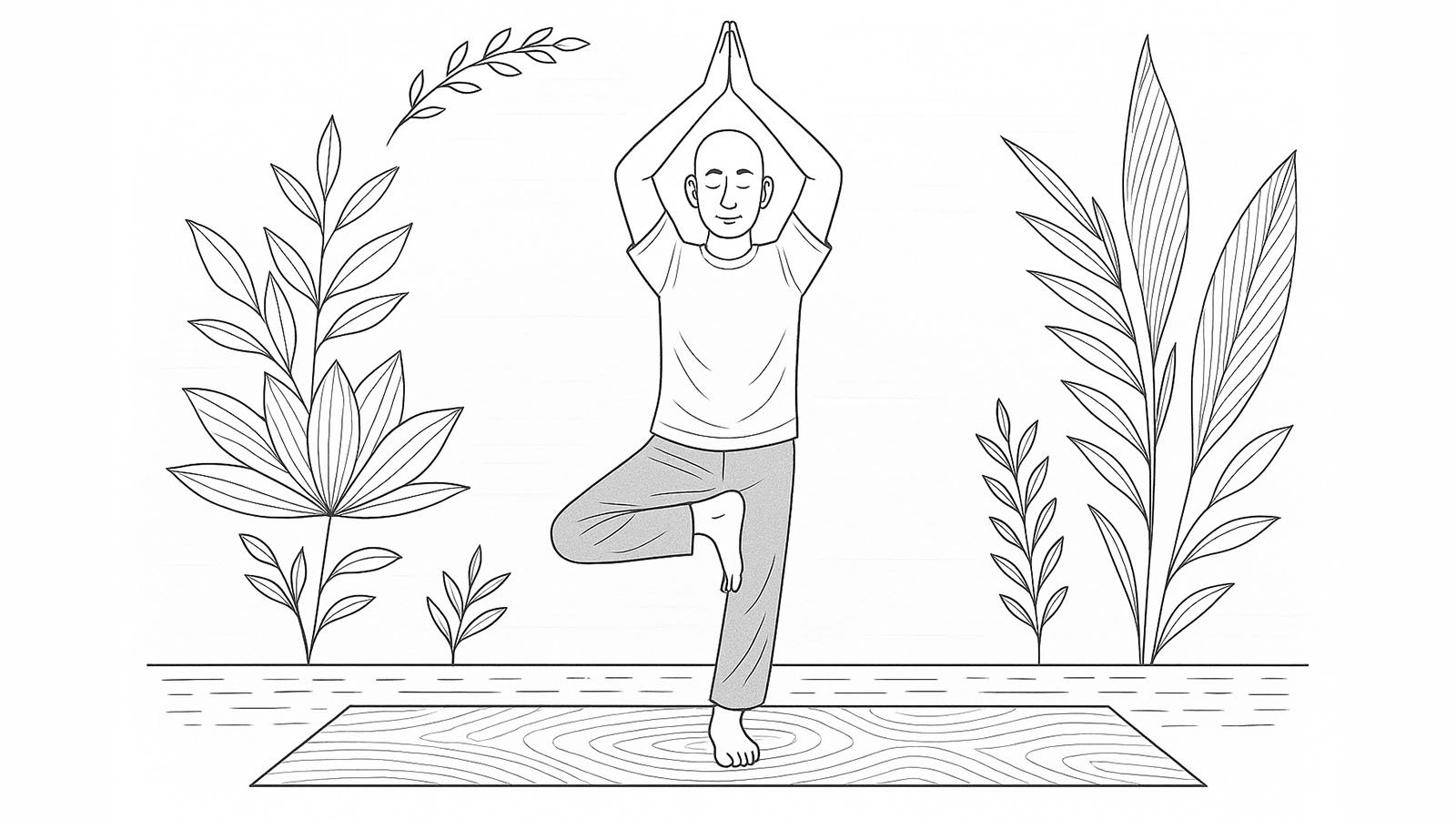
    Vrikshasana (वृक्षासन), or Tree Pose, is a standing balance posture that replicates the graceful and steady stance of a tree. “Vriksha” means tree in Sanskrit. This asana improves concentration, strengthens the legs, and promotes mental grounding, much like the roots of a tree anchoring it firmly to the ground.

    — Step-by-step Instructions —
    1. Stand upright with the spine straight and feet together.
    2. Shift your body weight onto the right leg.
    3. Bend the left knee and place the sole of the left foot on the inner side of the right thigh, with the heel near the groin and toes pointing upward, just above the right knee.
    4. Once balanced, slowly inhale and raise both arms straight above the head, joining the palms together.
    5. Hold the breath internally (antar kumbhak) and maintain a steady, balanced posture.
    6. While exhaling, gently lower the arms back down, but keep the leg position unchanged.
    7. Practice this posture with three rounds of internal breath retention.
    8. Then, repeat the entire process using the opposite leg.

    Note: This posture should be assumed during inhalation and held during internal retention of the breath, as described above.

    — Physical Benefits  —
    • Improves balance and posture
    • Strengthens the legs, ankles, and feet
    • Enhances flexibility in the hips and groin
    • Develops core stability and spinal alignment
    • Helps relieve flat feet and leg fatigue
    — Mental & Emotional Benefits  —
    • Improves focus and concentration
    • Promotes calmness and mental clarity
    • Enhances body-mind coordination
    • Encourages self-awareness and patience
    • Reduces anxiety and mental restlessness
    — Precautions to keep in Mind —
    • Avoid placing the foot directly on the knee joint
    • People with vertigo or balance disorders should practice with support
    • Those with recent leg or knee injuries should consult a doctor before practicing
    — Beginner’s Tips —
    • Start by placing the foot on the ankle or calf rather than the thigh
    • Use a wall for support until balance improves
    • Keep the gaze fixed on one point to maintain stability
    — Best Time to Practice —
    • Early morning is ideal when the mind is calm and focused
    • Can also be practiced in the evening when mental grounding is needed
    — Advanced Variations —
    • Raise the arms higher with a wider stretch
    • Close the eyes for an added challenge to balance and focus
    • Try the pose on a soft surface like grass to improve control

    — Wrapping Up —

    Vrikshasana is a beautiful and meditative posture that embodies balance, focus, and calmness. Just like a tree, this asana teaches us to remain strong and centered, even in the face of imbalance. Practicing Tree Pose regularly improves physical stability and cultivates a peaceful mind.
  • TADASAN (Palm Tree Posture)

    TADASAN (Palm Tree Posture)

    — Introduction —

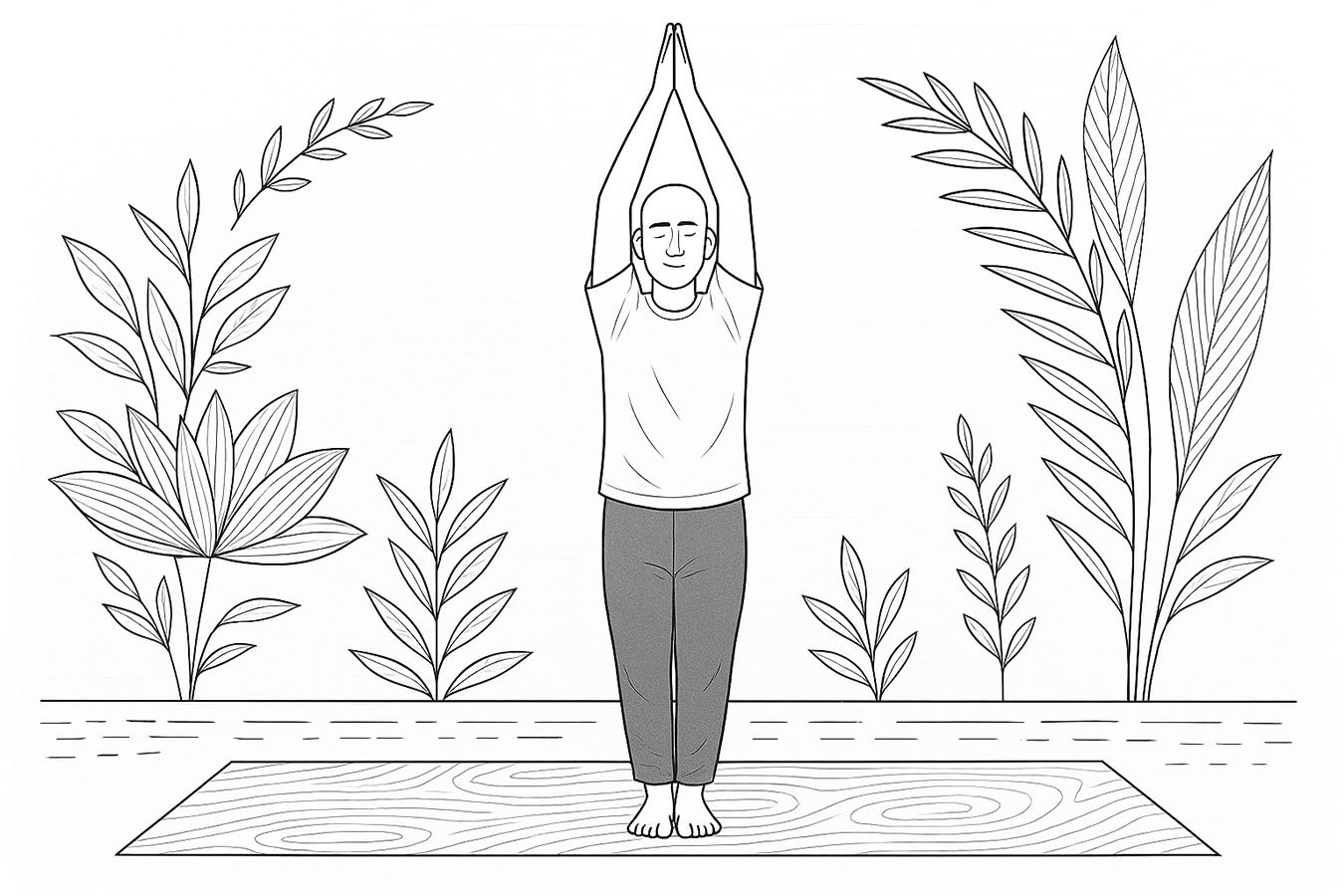
    Tadasana (ताड़ासन), also known as Mountain Pose, is the foundational standing asana in yoga. The word “Tada” means mountain, and “asana” means posture. It promotes stability, balance, and awareness in the body, making it an essential starting point for many standing poses.

    — Step-by-step Instructions —
    1. Stand upright with feet together and arms alongside the body
    2. Distribute your weight evenly on both feet
    3. Inhale and raise the arms overhead, keeping them shoulder-width apart and palms facing inward
    4. Stretch the whole body upward from the ankles to the fingertips
    5. Lift the heels slightly and balance on the toes
    6. Hold the posture for a few breaths, keeping the gaze straight ahead
    7. Exhale and slowly bring the heels down and arms back to the sides
    — Physical Benefits  —
    • Improves posture and body alignment
    • Strengthens thighs, knees, ankles, and abdominal muscles
    • Increases height and flexibility in children and adolescents
    • Activates and tones the lower body and spine
    • Enhances breathing capacity and oxygen intake
    — Mental & Emotional Benefits  —
    • Improves focus, awareness, and alertness
    • Promotes a sense of grounding and stillness
    • Calms the nervous system and reduces restlessness
    • Encourages mindful breathing and inner steadiness
    • Helps prepare the mind for meditation and deeper practice
    — Precautions to keep in Mind —
    • Avoid if suffering from low blood pressure or dizziness
    • Do not overstrain the calf muscles or knees
    • Pregnant women should practice under guidance
    — Beginner’s Tips —
    • Keep feet slightly apart if balancing is difficult
    • Focus on lifting through the crown of the head to elongate the spine
    • Practice near a wall if you’re unsteady on your feet
    — Best Time to Practice —
    • Early morning on an empty stomach is ideal
    • Can also be done in the evening to re-energize the body and relax the mind
    — Advanced Variations —
    • Add gentle arm movements or hand mudras for breath synchronization

    — Wrapping Up —

    Tadasana may appear simple, but it is a powerful pose that builds the foundation for all standing asanas. With regular practice, it cultivates a sense of strength, awareness, and presence in both body and mind. It’s a perfect posture to return to for resetting balance and focus.

  • PATANGASAN (Grasshopper Pose)

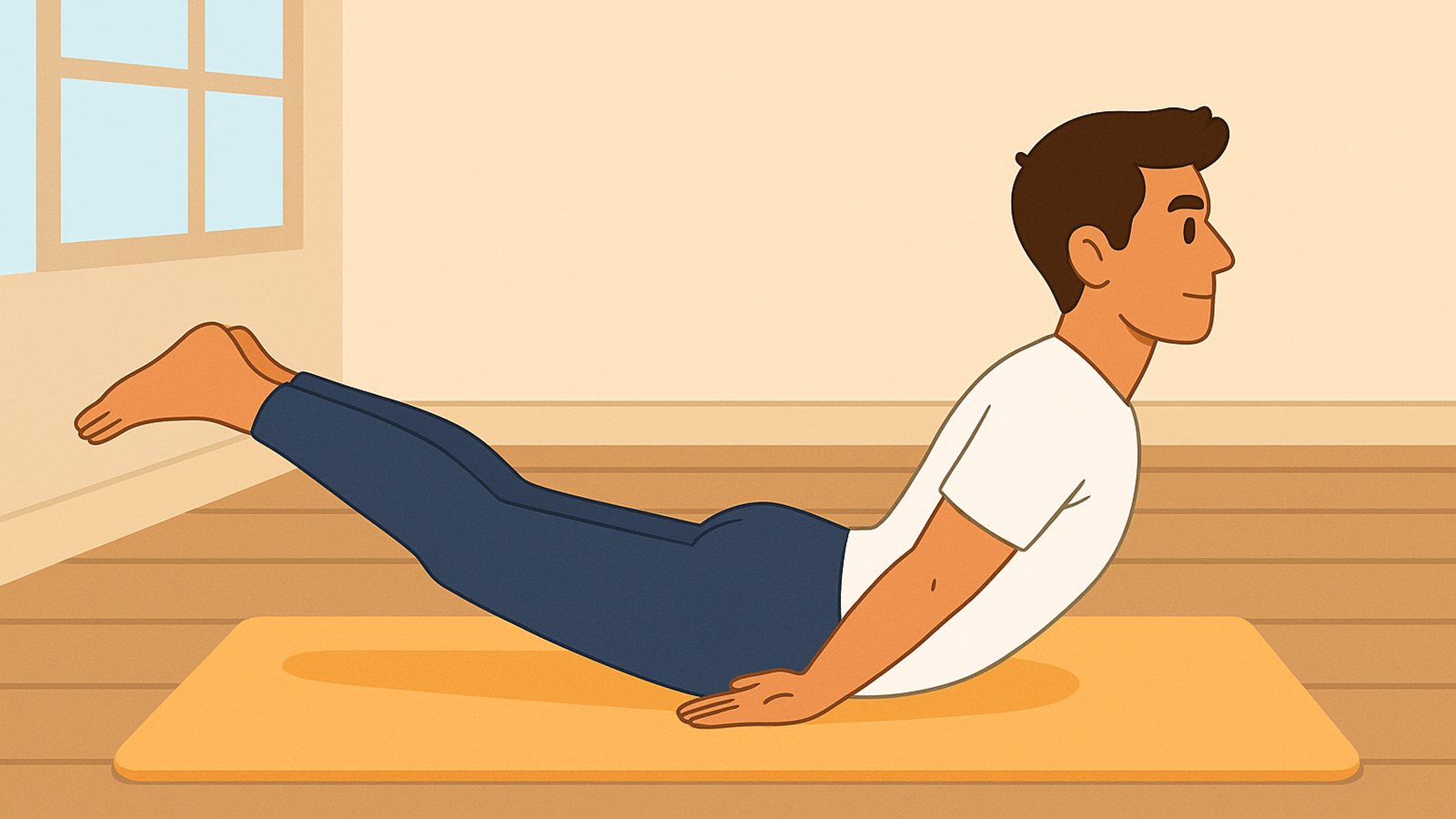
    PATANGASAN (Grasshopper Pose)

    — Introduction —

    Patangasana, also known as Grasshopper Pose, is a dynamic prone asana that strengthens the back, hips, and legs while improving control over the breath. The pose mimics the light, lifted stance of a grasshopper and helps build resilience, focus, and balance. Unlike other lying-back asanas, Patangasana emphasizes breath retention and simultaneous engagement of both upper and lower body, offering both physical strength and energetic grounding.

    — Step-by-step Instructions —
    1. Lie down on your stomach with both legs extended straight, close together, and parallel
    2. Rest the arms alongside the body with the palms facing upward
    3. Inhale deeply and hold the breath
    4. Simultaneously lift the legs from the hips, along with the head and chest, raising them as high as comfortably possible
    5. The stomach should remain in contact with the floor throughout the posture
    6. Keep the hands grounded on the floor and try to maintain the legs raised throughout the movement
    7. Hold the final posture while retaining the breath internally, then gently lower the body back to the floor before exhaling
    8. Repeat the pose five times, maintaining steady control in each round
    — Physical Benefits  —
    • Strengthens the lower back, glutes, hips, and thighs
    • Improves spinal flexibility and posture
    • Stimulates abdominal organs and aids in digestion
    • Tones the core muscles and increases stability
    — Mental & Emotional Benefits  —
    • Enhances focus and breath control
    • Develops patience and inner discipline
    • Calms the mind through breath awareness and body engagement
    — Precautions to keep in Mind —
    • Avoid this posture if you have hernia, high blood pressure, or recent abdominal surgery
    • Those with severe spinal issues, slipped disc, or neck problems should refrain or consult a qualified instructor
    • Pregnant women should not perform this pose
    • Do not hold the breath forcefully; internal retention should be gradual and comfortable
    — Beginner’s Tips —
    • Start with small lifts if full height is not possible
    • Keep the elbows slightly bent if the shoulders are tight
    • Perform warm-up stretches for the back and hips before attempting
    • Focus more on breath coordination than the height of the lift initially
    — Best Time to Practice —
    • Practice in the morning on an empty stomach for best results
    • Can also be done in the evening with at least a 3-hour gap after meals
    • Suitable during core strengthening or back care sequences
    — Advanced Variations —
    • Combine Patangasana with other prone backbends like Salabhasana for a progressive sequence
    • Practice with eyes closed to build internal awareness and balance

    — Wrapping Up —

    Patangasana is a subtle yet powerful asana that builds strength, coordination, and control. Through active engagement of both the upper and lower body with breath retention, it revitalizes the nervous system and brings mental steadiness. A consistent practice of Grasshopper Pose supports physical resilience and encourages inner stillness—making it an essential posture for both strength and self-awareness in any yogic journey.

  • VIMUKH AKARNA DHANURASAN (Twisted Archer Pose)

    VIMUKH AKARNA DHANURASAN (Twisted Archer Pose)

    — Introduction —

    Vimukh Akarna Dhanurasan, also known as Twisted Akarna Dhanurasan, is an advanced variation of Akarna Dhanurasan. It incorporates a deep spinal twist by drawing the foot toward the opposite ear while rotating the torso. This asan not only enhances flexibility in the legs and hips but also improves spinal mobility and stimulates internal organs. The twist intensifies both the physical and energetic benefits of the original pose.

    — Step-by-step Instructions —
    • Sit on the floor with both legs extended straight in front of you.
    • Lean forward slightly and use your left hand to hold the right big toe and your right hand to hold the left big toe.
    • Take a deep inhalation, followed by a full exhalation.
    • While exhaling, bend the left knee and begin drawing the leg upward.
    • Slide the left foot beneath the left arm and pull it gently toward the right ear, keeping the left knee close to the left armpit.
    • Keep the right leg extended upright throughout the pose.
    • After full exhalation, hold the breath in external retention and direct your gaze straight ahead, maintaining a focused expression like an archer aiming at a target (Fig. 211).
    • Inhale again and slightly reduce the intensity of the stretch, but remain in the posture.
    • Exhale fully, retain the breath externally, and re-engage the stretch with steadiness.
    • Hold the posture through three deep breaths, synchronizing each breath with external retention.
    • Release gently and reverse the positions of the hands and legs to perform the posture on the other side.
    • Repeat the practice on the alternate side, maintaining external breath retention for three full breaths.
    — Physical Benefits  —
    • Increases flexibility of hamstrings, groins, and hips
    • Strengthens arms, shoulders, and abdominal muscles
    • Improves spinal mobility and releases tension in the back
    • Stimulates the liver, kidneys, and digestive system through the twist
    — Mental & Emotional Benefits  —
    • Enhances concentration and breath awareness
    • Balances energy and calms restlessness through deep focus
    • Supports emotional release and inner stillness
    — Precautions to keep in Mind —
    • Avoid if you have sciatica, slipped disc, hernia, or spinal injury
    • Do not force the twist or strain the knee while pulling the leg
    • People with shoulder or hip joint limitations should approach this pose gently
    • Practice under guidance if unsure of spinal alignment during twists
    — Beginner’s Tips —
    • Start by practicing the basic Akarna Dhanurasan before attempting the twisted variation
    • Use a strap around the foot to ease into the posture if you cannot reach the toe
    • Keep the opposite leg slightly bent if the hamstrings are tight
    • Focus more on maintaining spinal length than achieving the full twist initially
    — Best Time to Practice —
    • Best practiced in the morning or evening on an empty stomach
    • Ideal during intermediate or advanced practice sessions focusing on flexibility and detoxification
    • Avoid after heavy meals or when abdominal discomfort is present
    — Advanced Variations —
    • Akarna Dhanurasan (Archer Pose), bring toes near the same ear.

    — Wrapping Up —

    Vimukh Akarna Dhanurasan is a challenging yet rewarding asan that blends strength, flexibility, and deep internal awareness. The posture’s twisting action detoxifies the organs while improving spinal health and mental clarity. With consistent practice, it fosters not only physical agility but also sharpens focus and cultivates inner stillness, making it a valuable addition to any advanced yog sequence.

  • AKARNA DHANURASAN (Archer Posture)

    AKARNA DHANURASAN (Archer Posture)

    — Introduction —

    Akarna Dhanurasana, also known as the Archer Pose, derives its name from the Sanskrit words “Karṇa” meaning ear and “Dhanur” meaning bow. In the final posture, the body resembles an archer pulling a bowstring, hence the name. This asana strengthens the arms, tones the abdominal region, improves flexibility in the legs and hips, and enhances overall body control.

    — Step-by-step Instructions —
    1. Sit on the floor with legs extended forward and spine upright
    2. Bend the right leg and hold the right big toe with the right hand
    3. Hold the left big toe with the left hand and keep the left leg straight
    4. Inhale and pull the right foot toward the right ear as if drawing a bowstring
    5. Keep the spine erect and shoulders relaxed while maintaining balance
    6. Look straight ahead or in the direction of the extended leg
    7. Hold the final posture for a few breaths without straining
    8. Exhale and gently release the foot and return to the starting position
    9. Repeat the posture on the opposite side by switching leg and hand positions
    — Physical Benefits  —
    • Stretches hamstrings, calves, and hip joints
    • Strengthens arms, shoulders, and abdominal muscles
    • Tones the lower body and helps improve posture
    • Stimulates digestion and increases hip flexibility
    — Mental & Emotional Benefits  —
    • Enhances focus, body awareness, and mental clarity
    • Symbolically builds willpower and one-pointed concentration
    — Precautions to keep in Mind —
    • Avoid this pose if you have hamstring injuries, hernia, or groin strain
    • People with severe lower back or spinal conditions should refrain from practice
    • Those with knee or ankle pain should perform only under expert guidance
    • Do not overstretch or force the leg; maintain ease in movement
    — Beginner’s Tips —
    • Start by holding the foot with a strap if reaching the toe is difficult
    • Keep the opposite leg lightly bent if the hamstrings are too tight
    • Focus on keeping the spine upright rather than pulling the foot too high
    • Practice warm-up stretches before attempting this pose
    — Best Time to Practice —
    • Practice in the morning or early evening on an empty stomach
    • Ideal after warming up the body with preparatory hip and leg stretches
    • Can be done during intermediate sessions focusing on strength and flexibility
    — Advanced Variations —
    • Practice Akarna Dhanurasana with both hands, pulling the bent leg for deeper engagement
    • Twisted Akarna Dhanurasana, pulls the leg toward the opposite ear, rather than the same-side ear as in the basic pose

    — Wrapping Up —

    Akarna Dhanurasana is a powerful posture that blends flexibility, balance, and mental control. The archer-like motion symbolizes focus, strength, and discipline. By practicing regularly, one can improve lower body flexibility, upper body strength, and mental steadiness. It’s an excellent asana for those seeking to sharpen concentration and expand physical awareness in their yoga journey.

  • PASCHIMOTTANASAN (Posterior Stretch)

    PASCHIMOTTANASAN (Posterior Stretch)

    — Introduction —

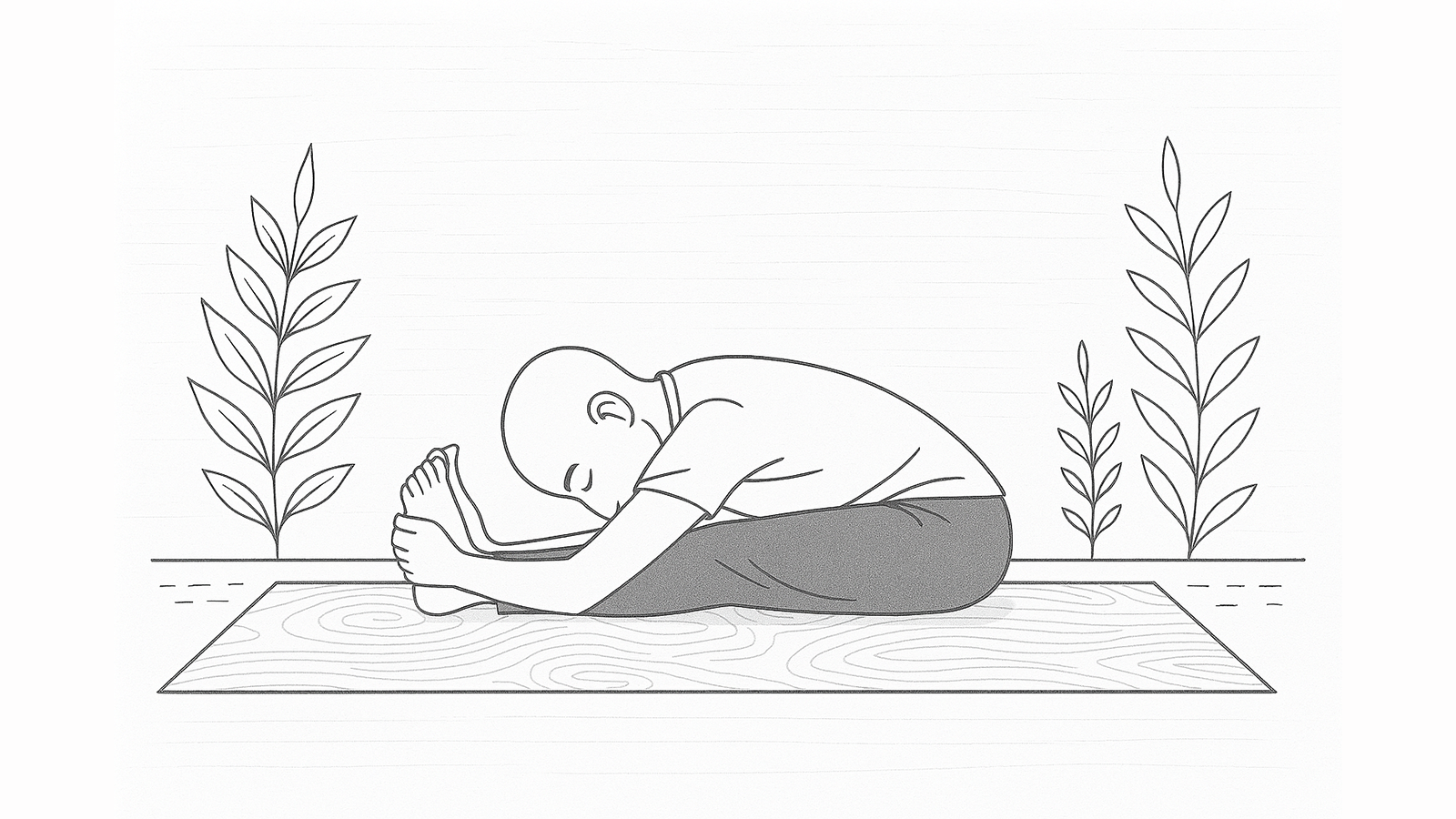
    Paschimottanasana (पश्चिमोत्तानासन), meaning “intense stretch of the west side,” refers to the stretch along the back side (west) of the body—from the head to the heels. It is a deeply calming and inward-focused pose, ideal for improving flexibility and balancing the nervous system. Commonly practiced in Hatha Yoga, it promotes physical elongation and emotional release, especially when held with the breath.

    — Step-by-step Instructions —
    1. Sit on the floor with legs extended straight in front of you and spine erect.
    2. Flex the feet so that the toes point upward and thighs remain grounded.
    3. Inhale deeply and raise both arms overhead, stretching the spine upward.
    4. As you exhale, bend forward from the hips (not the waist), keeping the back long.
    5. Reach the hands toward the feet, ankles, or shins, depending on flexibility.
    6. Try to grasp the toes or soles with your fingers. Keep elbows slightly bent touching the floor.
    7. Let the head rest between the knees, and the chest rest gently over the thighs.
    8. Breathe slowly and deeply, holding the posture for 20–60 seconds, or longer with practice.
    9. To release, inhale and slowly rise up, lifting arms and spine together.
    — Physical Benefits  —
    • Stretches the entire back body, especially spine, hamstrings, and calves
    • Stimulates the abdominal organs, improving digestion and appetite
    • Reduces belly fat and menstrual discomfort
    • Relieves lower back pain and stiffness
    • Calms the nervous system
    — Mental & Emotional Benefits  —
    • Promotes a deep state of relaxation and inward focus
    • Reduces stress, anxiety, and mental restlessness
    • Encourages emotional release and surrender
    • Supports a meditative state during longer holds
    — Precautions to keep in Mind —
    • Avoid the pose in case of slipped disc, sciatica, or severe lower back injury
    • Those with asthma, hernia, or abdominal surgery should consult a doctor or teacher
    • Pregnant women should avoid deep forward bends
    • Never strain or bounce while reaching forward—ease into the pose gradually
    — Beginner’s Tips —
    • Sit on a folded blanket if hips are tight or spine rounds while bending
    • Use a yoga strap around the feet to bridge the gap if you can’t reach the toes
    • Focus on lengthening the spine rather than touching the toes
    • Even a gentle forward bend offers benefits when practiced with the breath
    — Best Time to Practice —
    • Best practiced in the morning on an empty stomach
    • Can also be practiced in the evening after a light gap between meals
    • Ideal after backbends to neutralize the spine, or at the end of practice to cool down
    — Advanced Variations —
    • Janu Sirsasana (Head-to-Knee Pose) can be used as a one-legged prep

    — Wrapping Up —

    Paschimottanasana is more than a hamstring stretch—it is a symbol of surrender, humility, and inner stillness. When practiced mindfully, it calms the brain, tones the body, and prepares the practitioner for deeper meditative states. With regular effort, this asana becomes a gateway to inner balance, patience, and flexibility in both body and mind.